Introduction
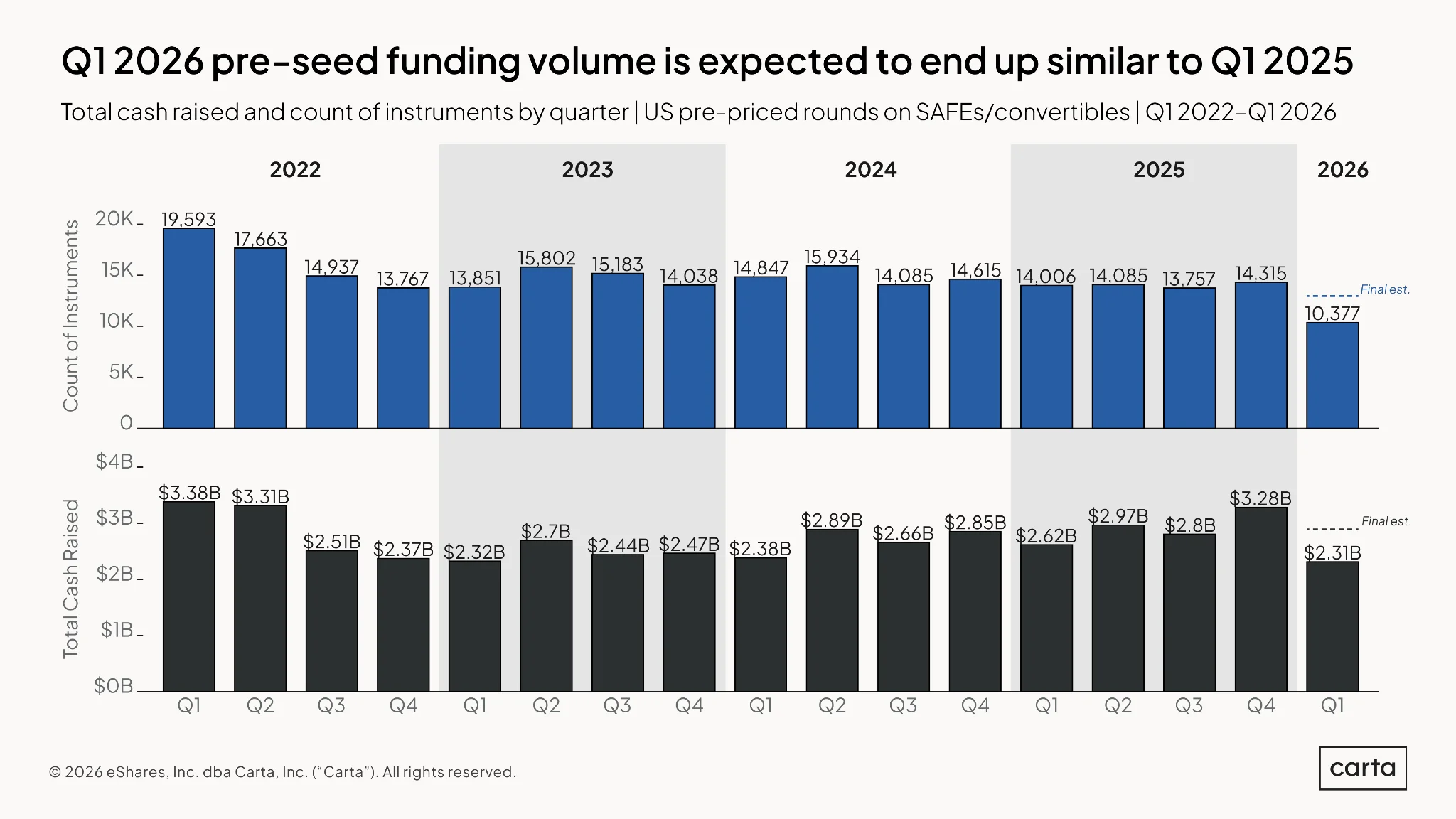
Some 3,000 U.S.-based startups on Carta raised pre-seed funding in Q1 2026, adding up to over $2.3 billion in total cash raised. As more data is entered over the next several weeks, we expect the total to reach around $2.9 billion, in line with recent quarters.
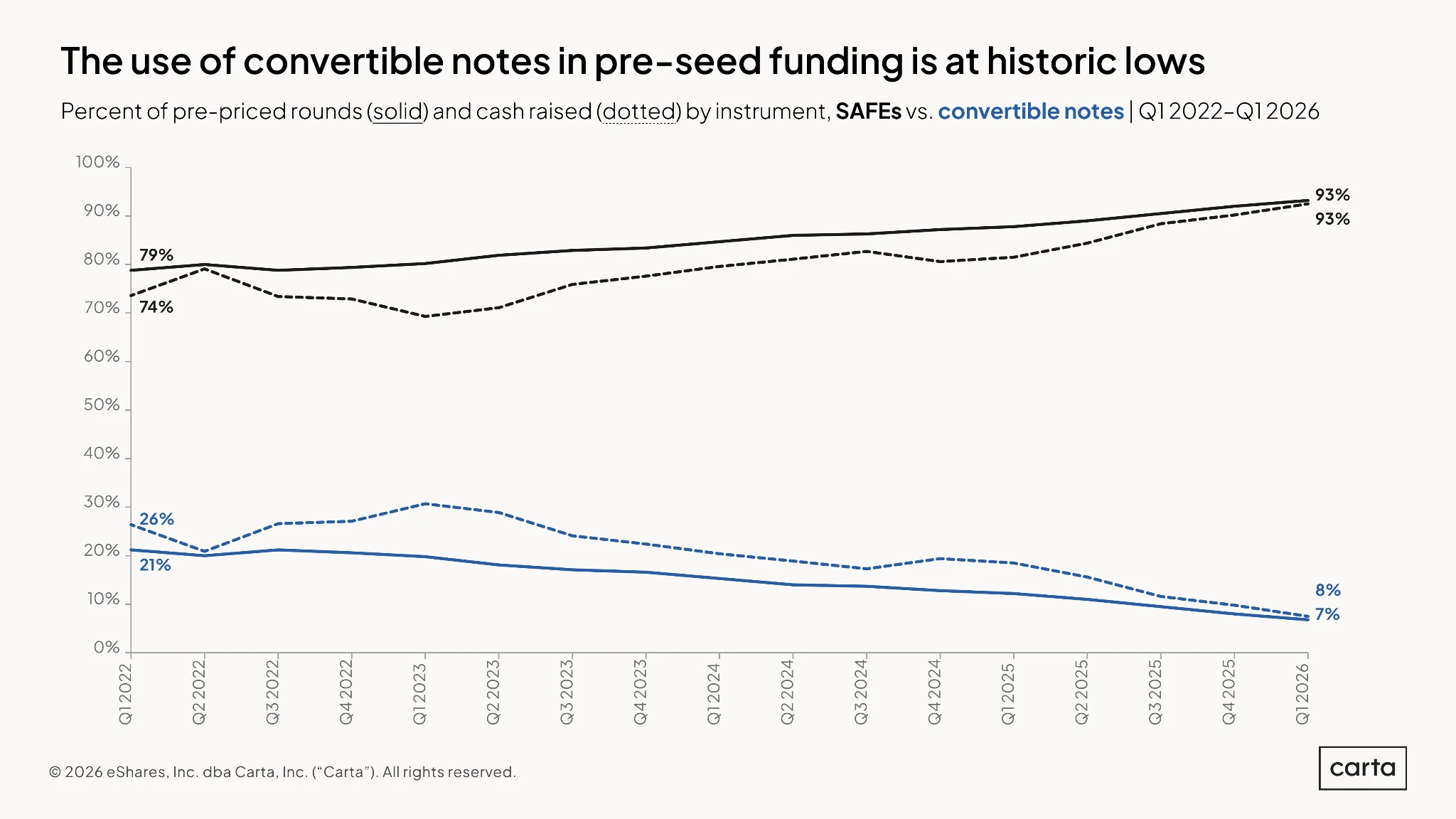
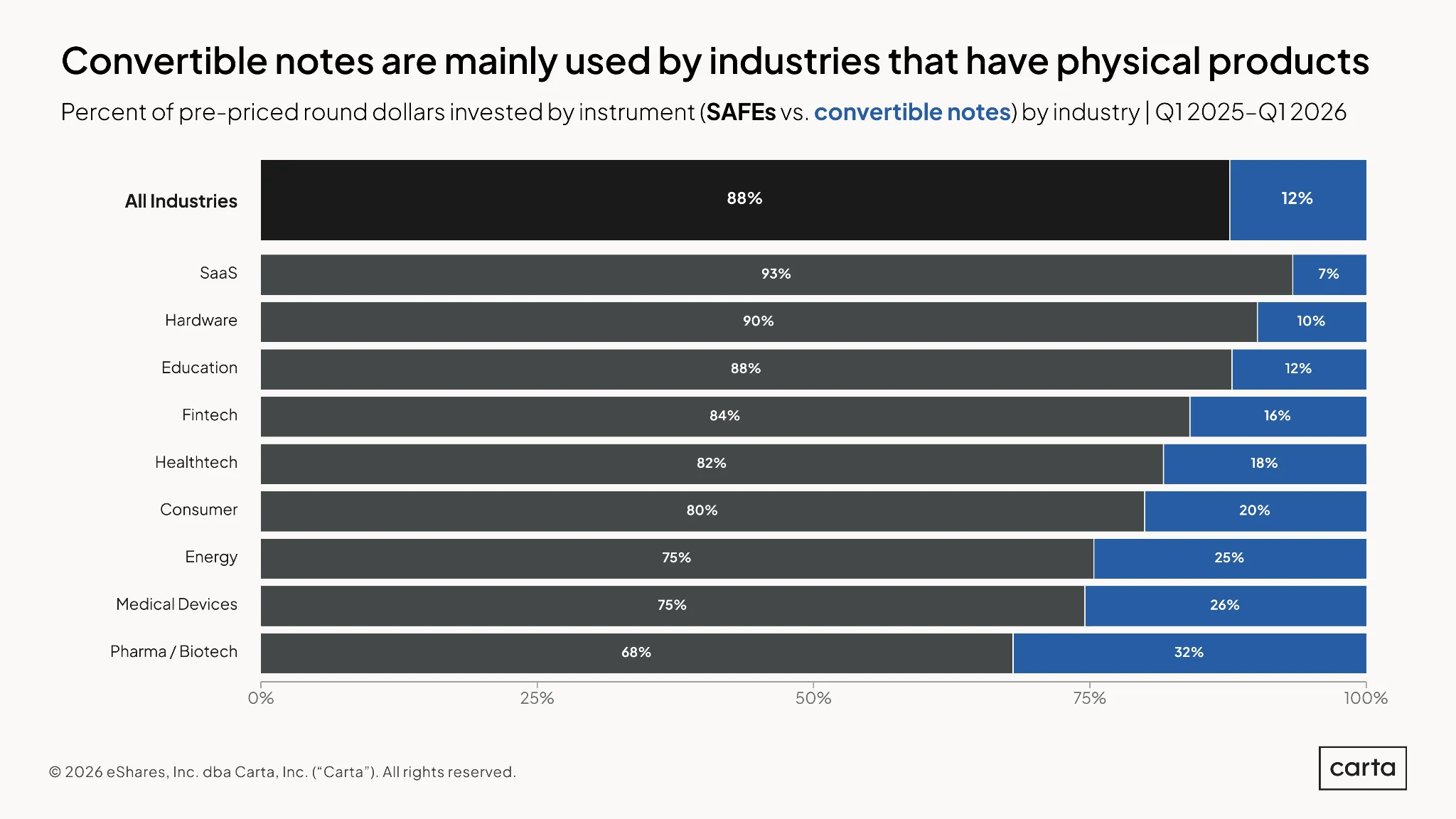
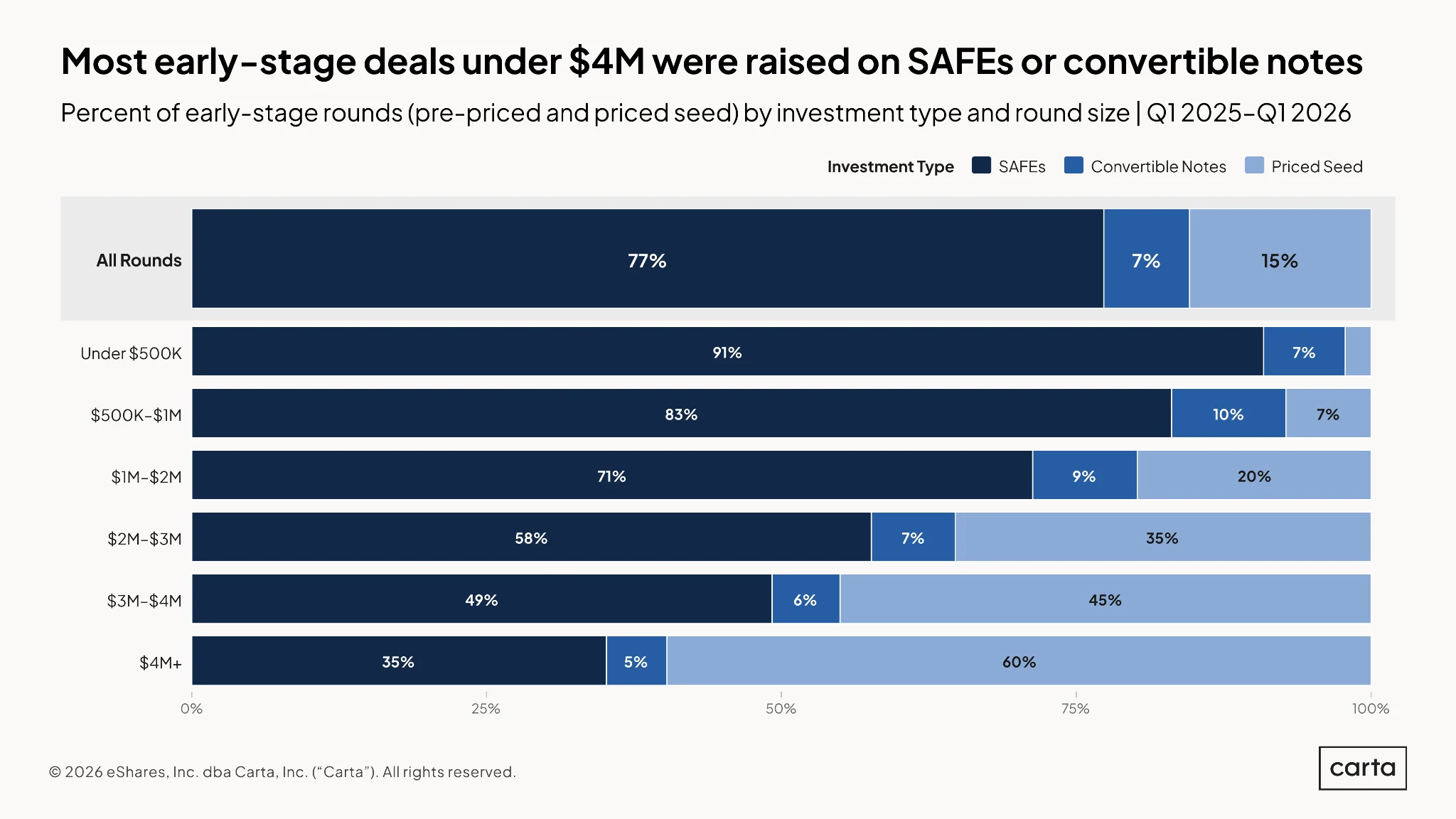
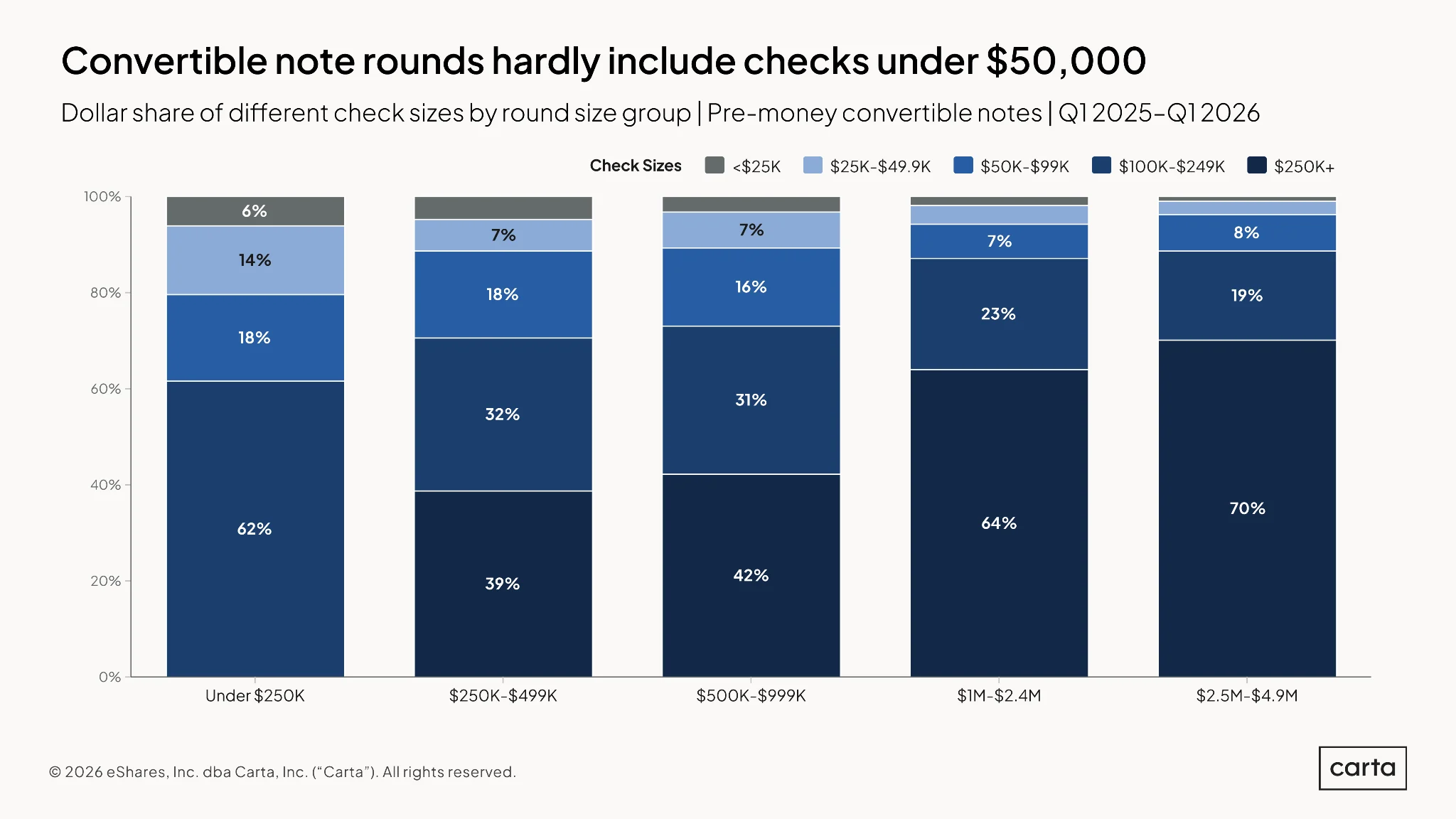
Pre-seed funding encompasses two types of unpriced instruments: SAFEs and convertible notes. SAFEs are far more popular and represent the default financing instrument for early-stage startups. In Q1 2026, convertible notes comprised a record low of just 7% of pre-seed rounds and 8% of pre-seed dollars.
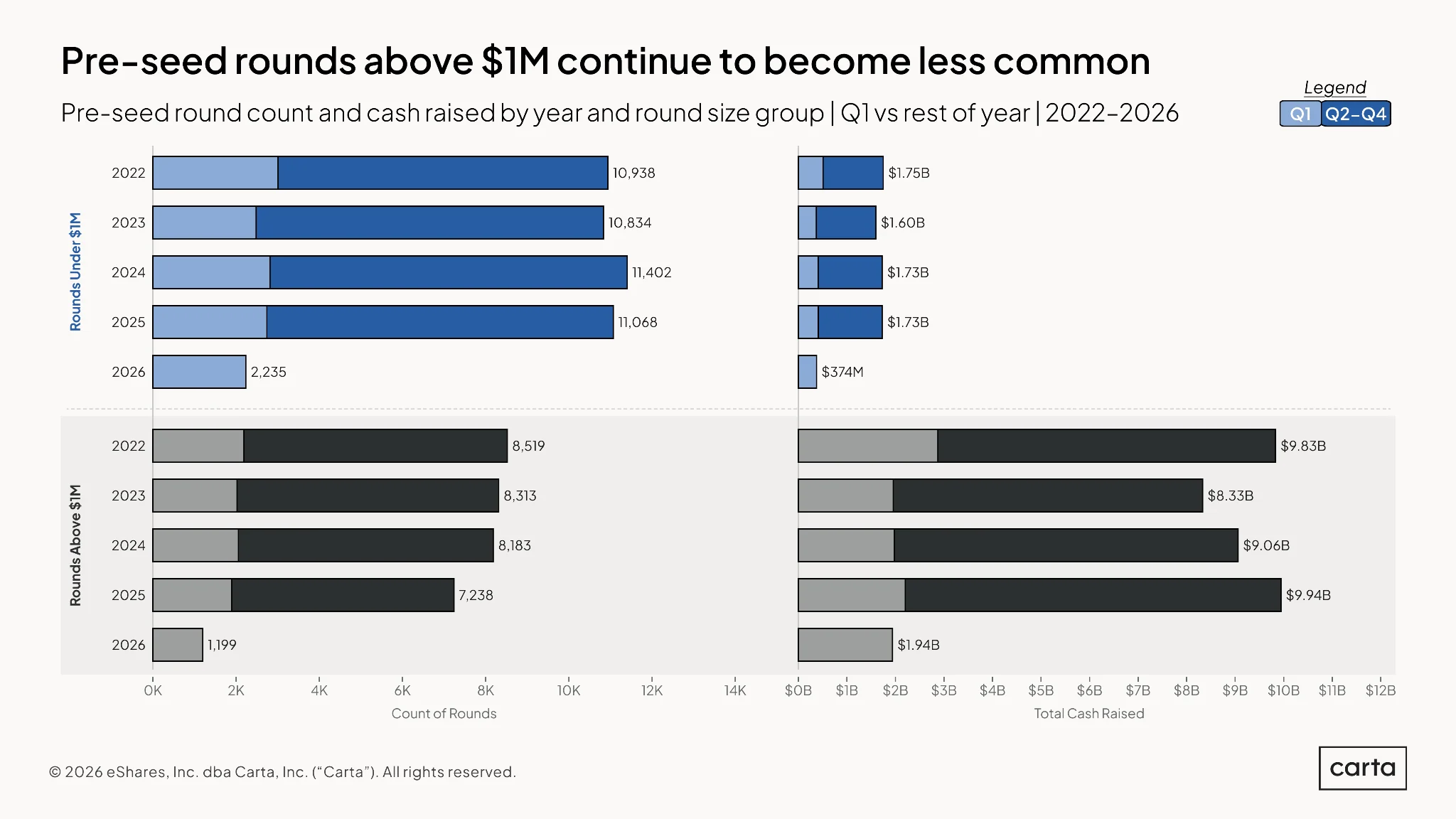
The typical pre-seed round is getting smaller in dollar value, while a small number of mega-rounds are balancing out the total amount of cash being invested. In other words, the distribution of the same pool of cash is becoming less evenly distributed. The technological boom in artificial intelligence has contributed to this divergence, creating a more competitive funding market.
Top 5 findings for Q1 2026
The volume of pre-seed capital is stable: Q1 2026 is on track to match Q1 2025 with respect to pre-priced investment. The total quarterly amount of cash raised at the earliest stage of venture is typically hovering between $2.5 billion and $3 billion.
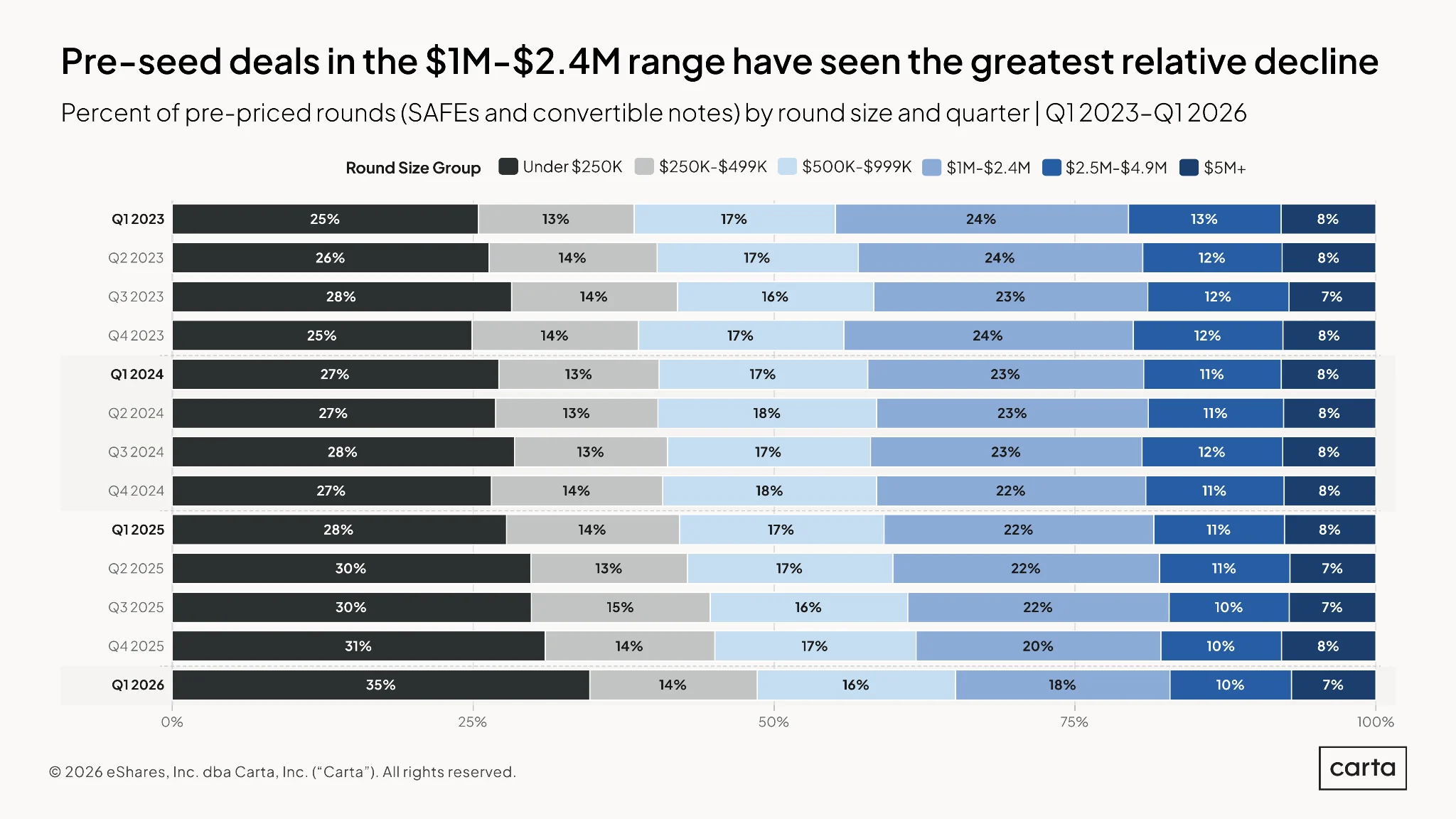
The disappearing middle ground: Rounds between $1 million and $2.5 million accounted for 24% of all pre-seed rounds in Q1 2023, but just 18% of rounds in Q1 2026. The frequency of rounds larger than $2.5 million seems stable, while smaller rounds under $1 million are more prevalent.
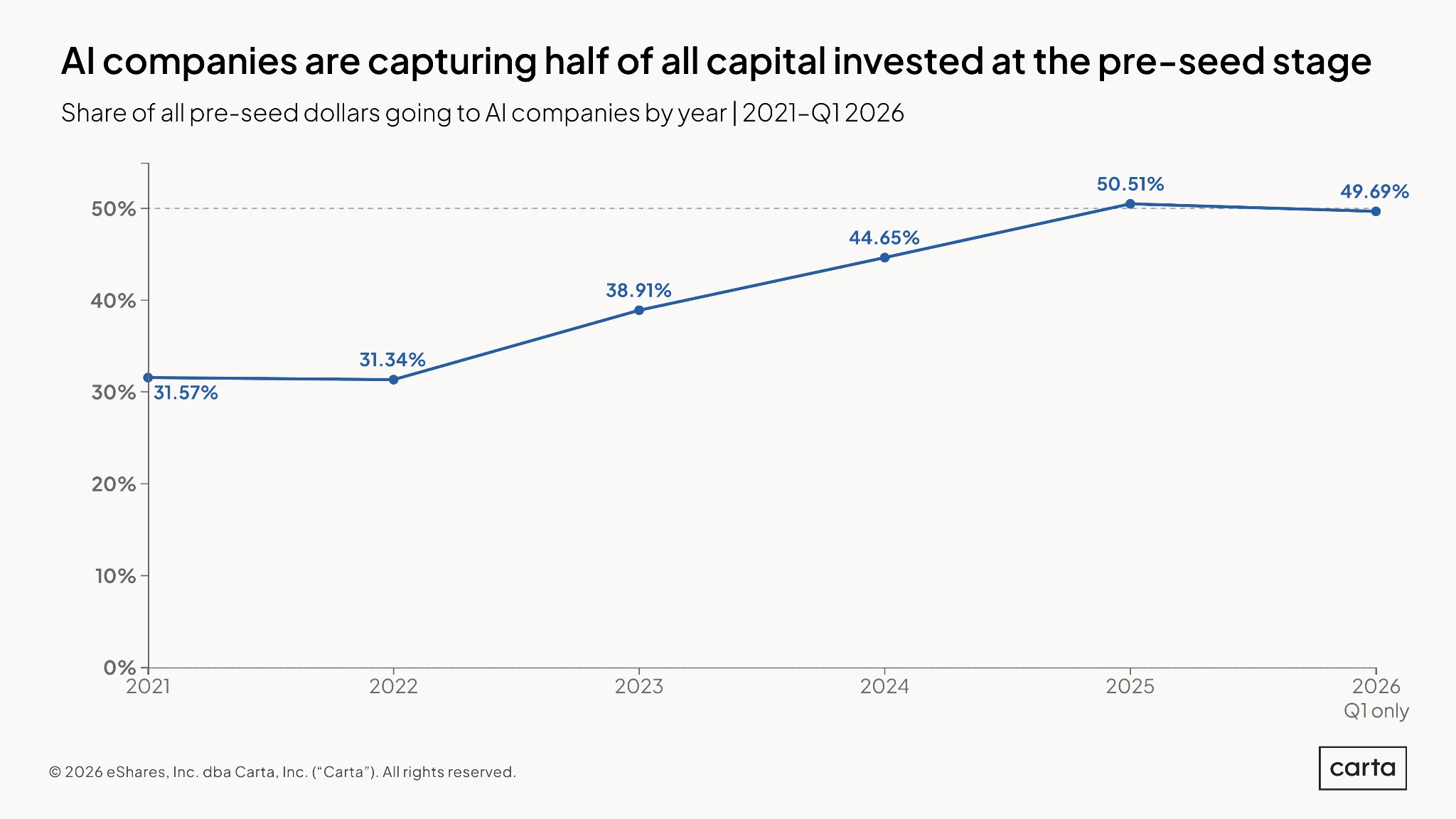
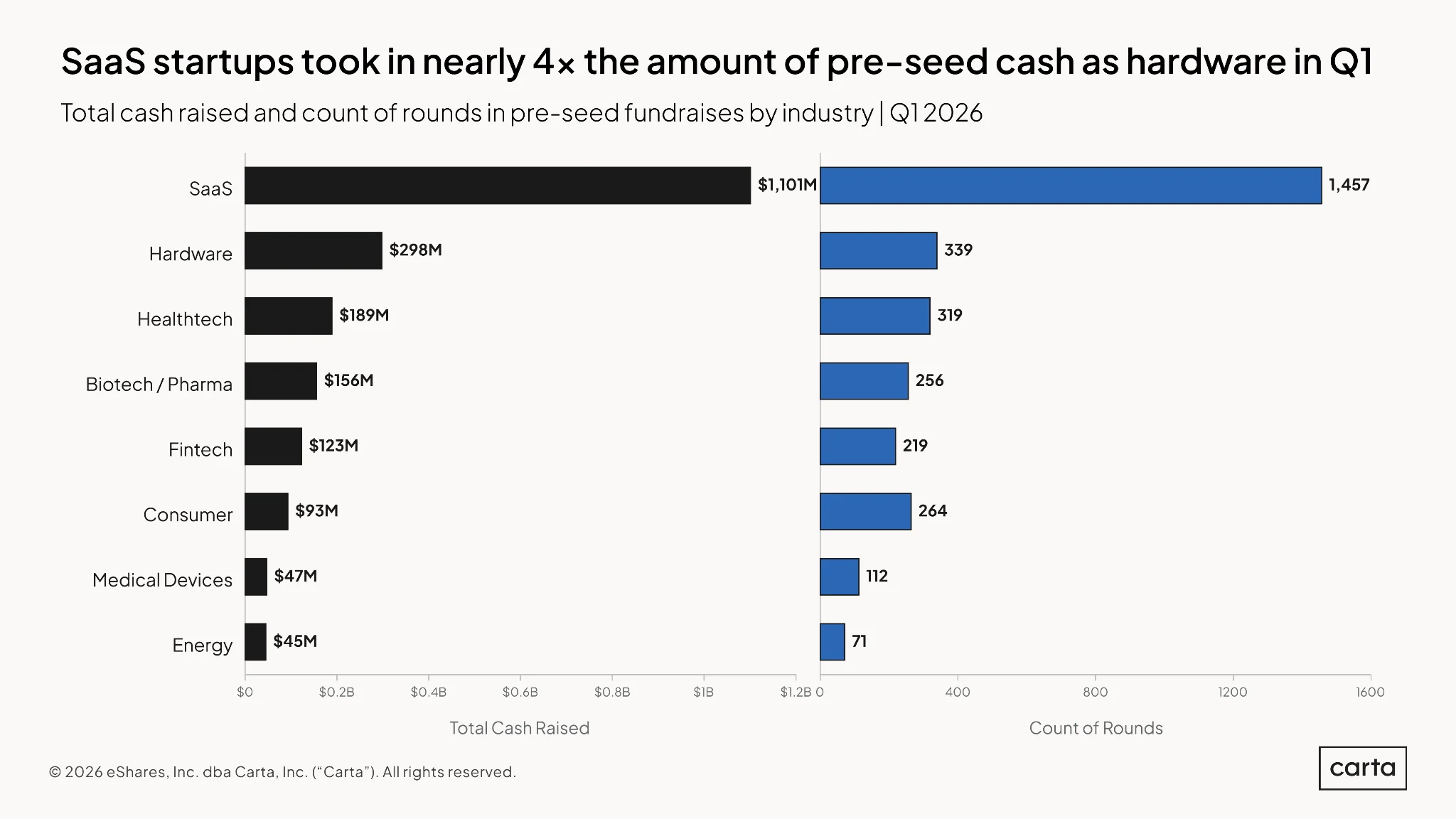
AI funding continues to surge: Just a few years ago, AI startups received around 30% of all pre-seed dollars. By Q1 of this year, they hit the 50% mark, in line with what we’ve seen at later stages of venture capital.
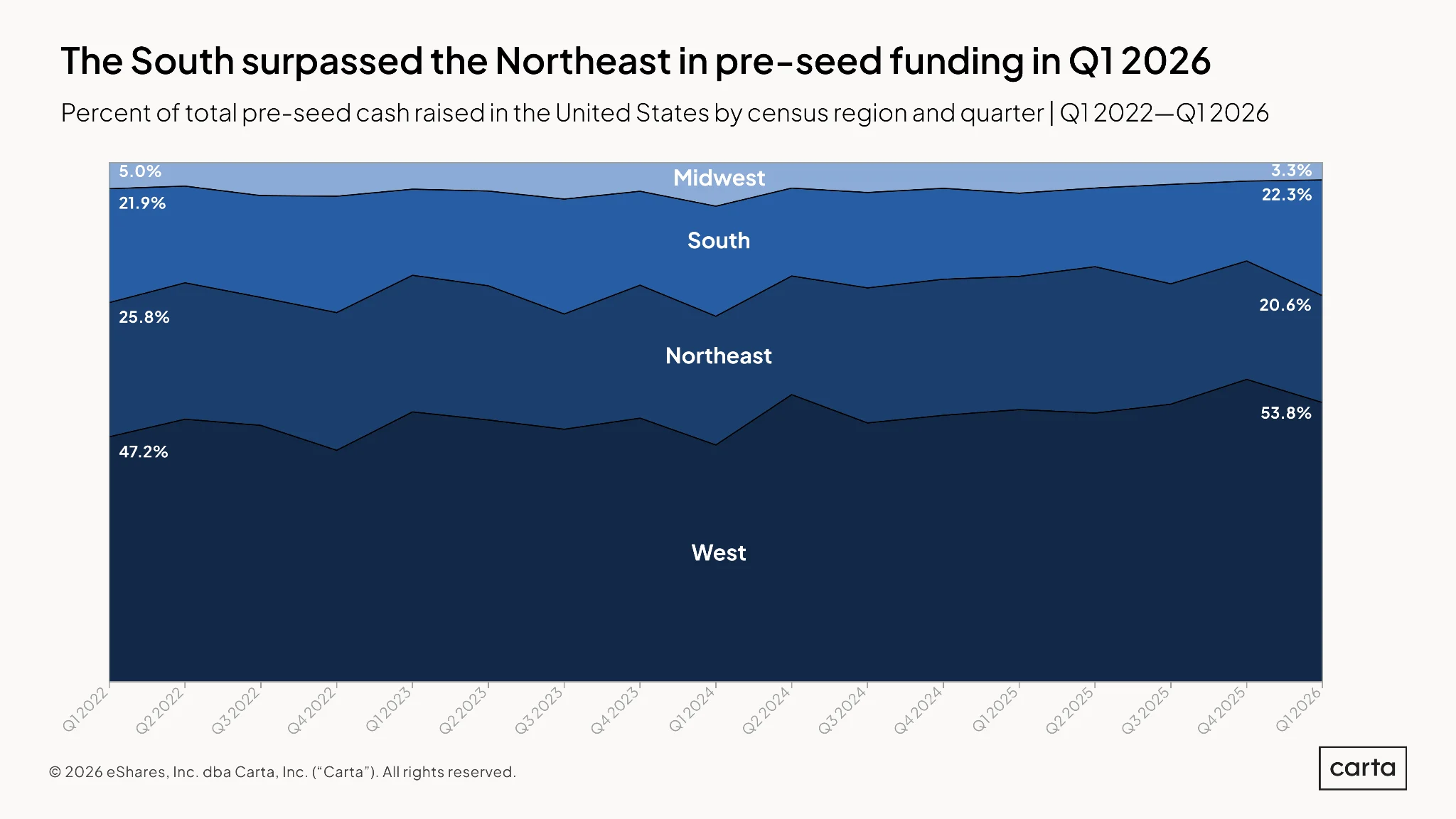
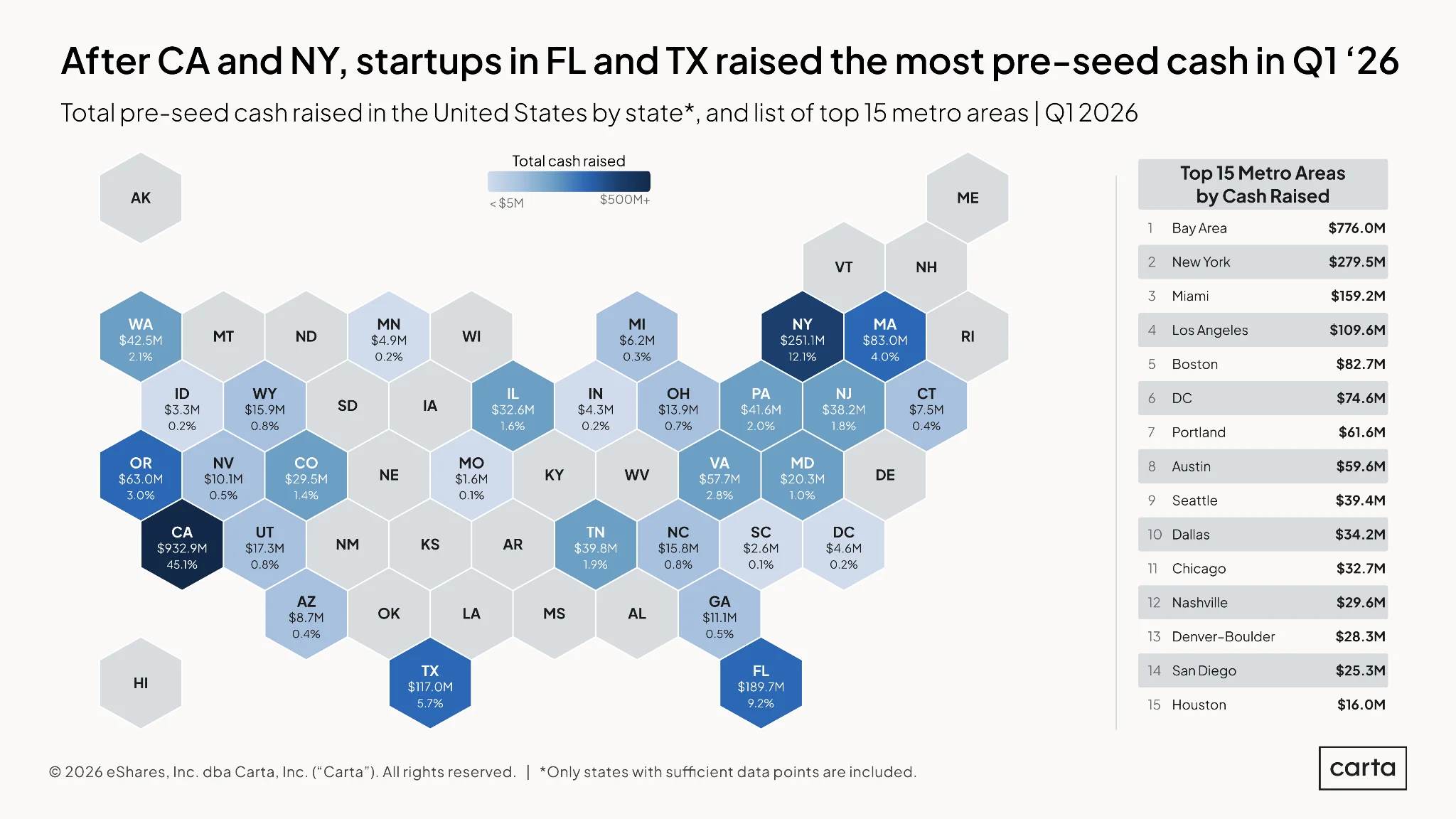
Keep your eyes on the South: The rise of startups in the South isn’t a new story, but Q1 was particularly notable in this regard. The South overtook the Northeast in overall share this quarter. Plus, the Miami metro area was the third largest pre-seed funding hub, eclipsing Los Angeles and Boston.
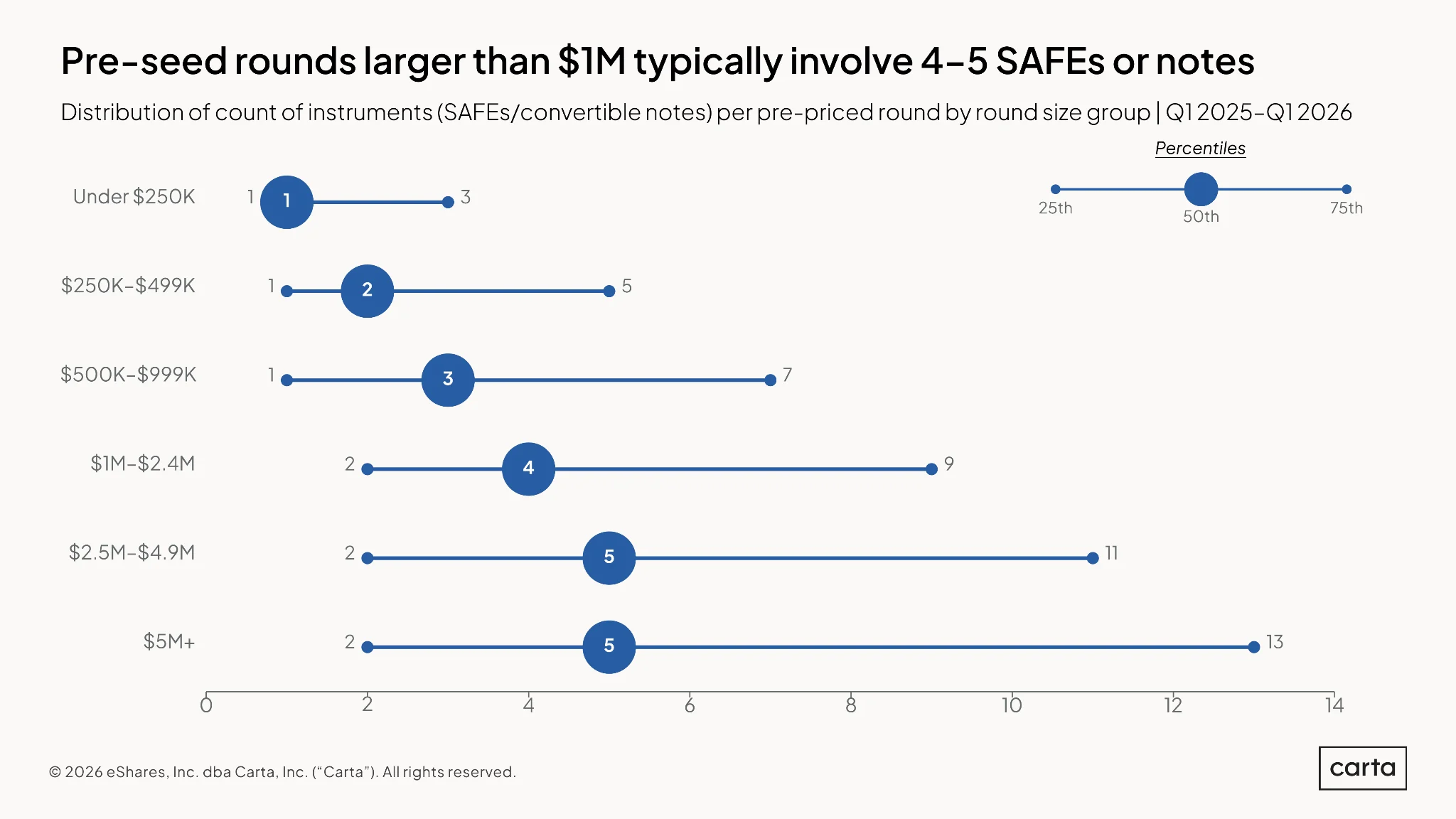
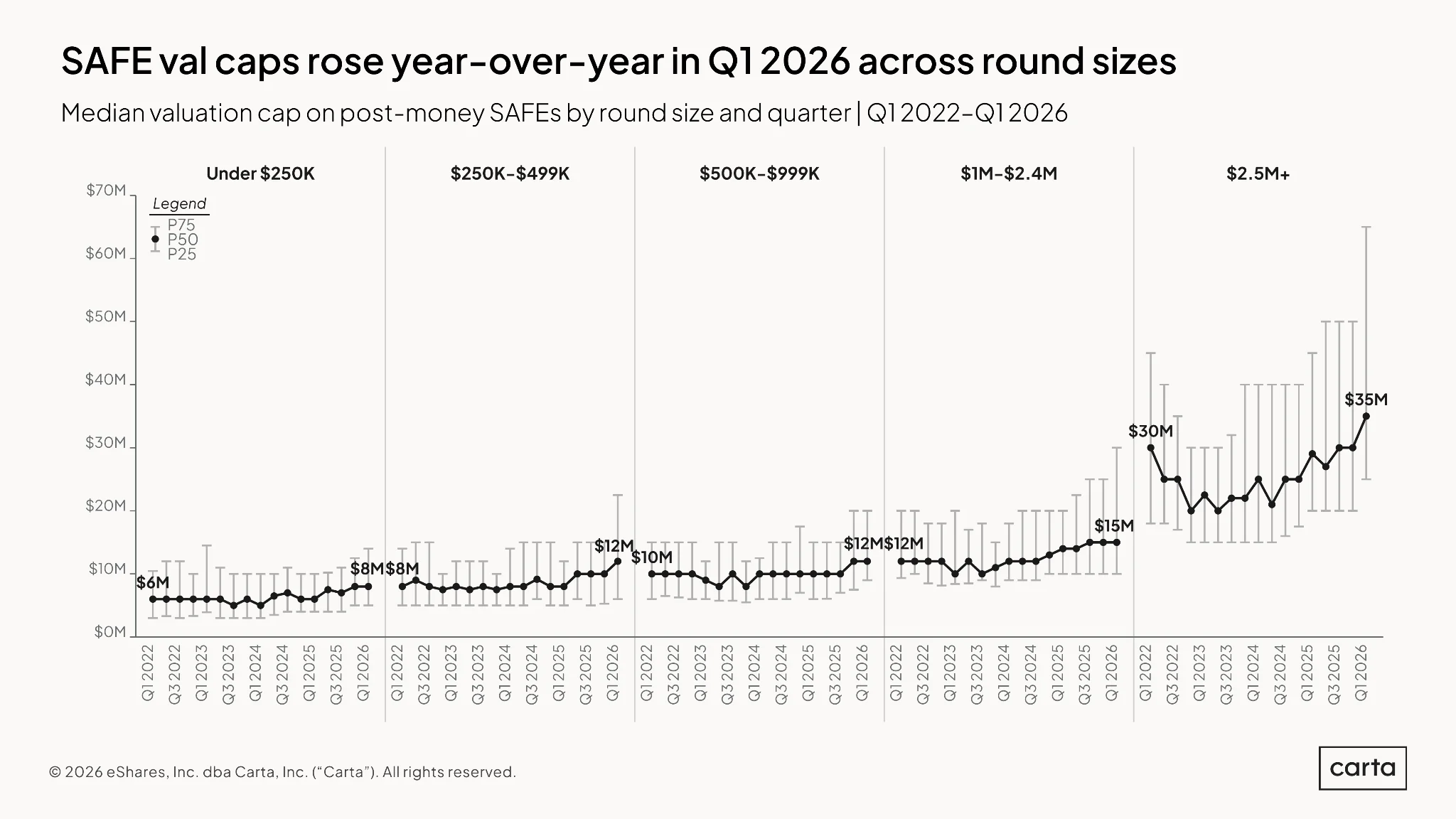
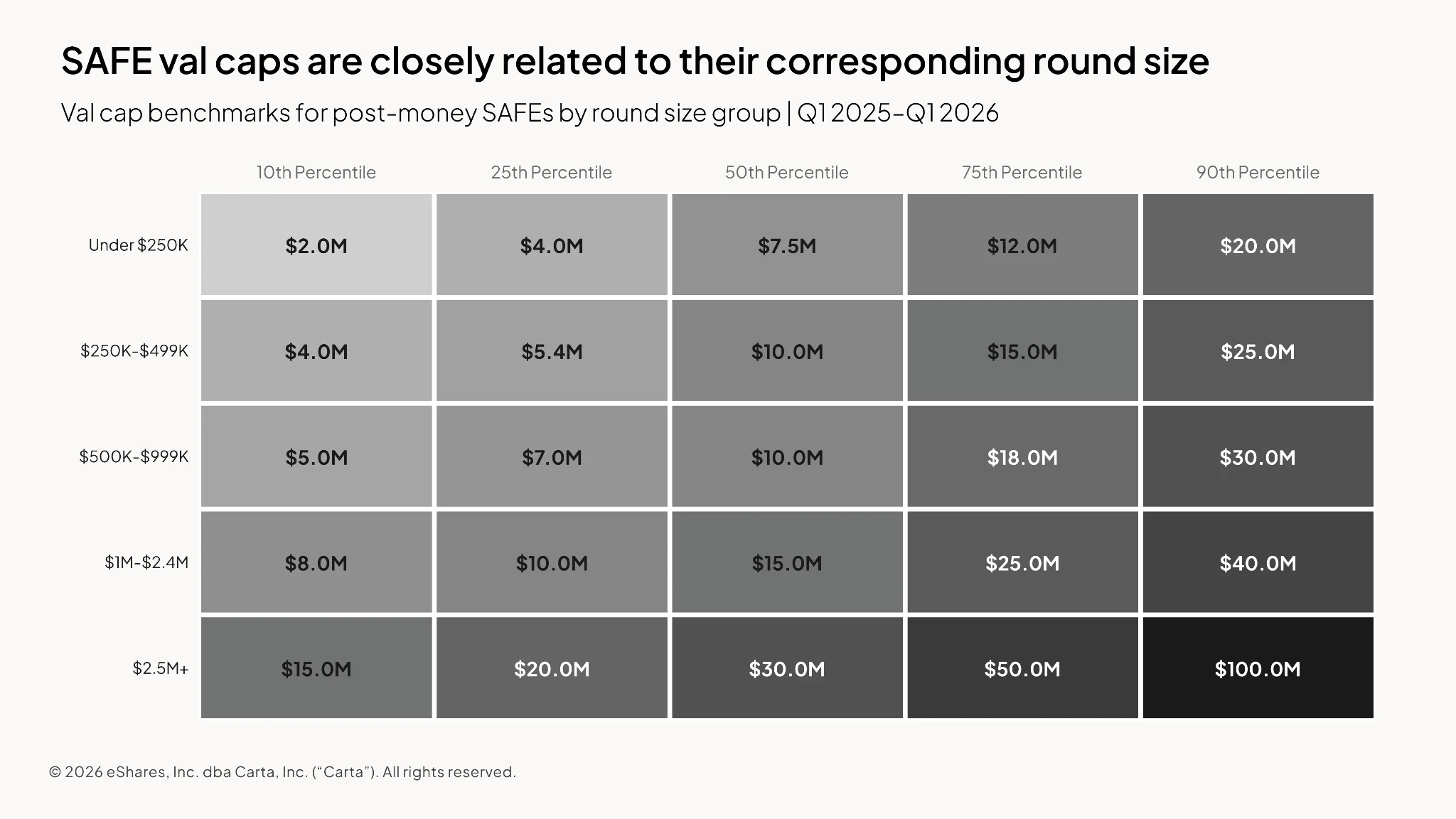
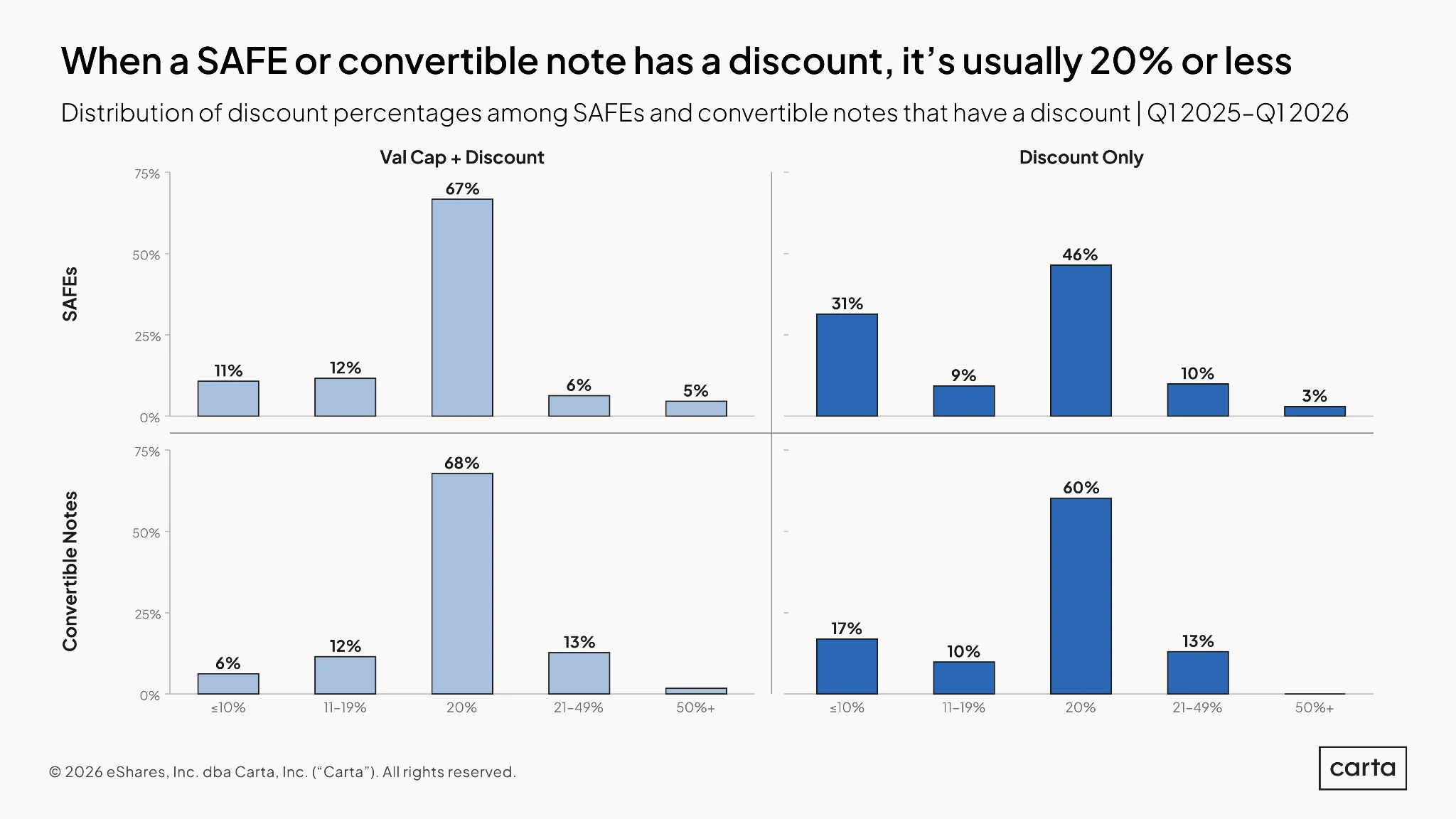
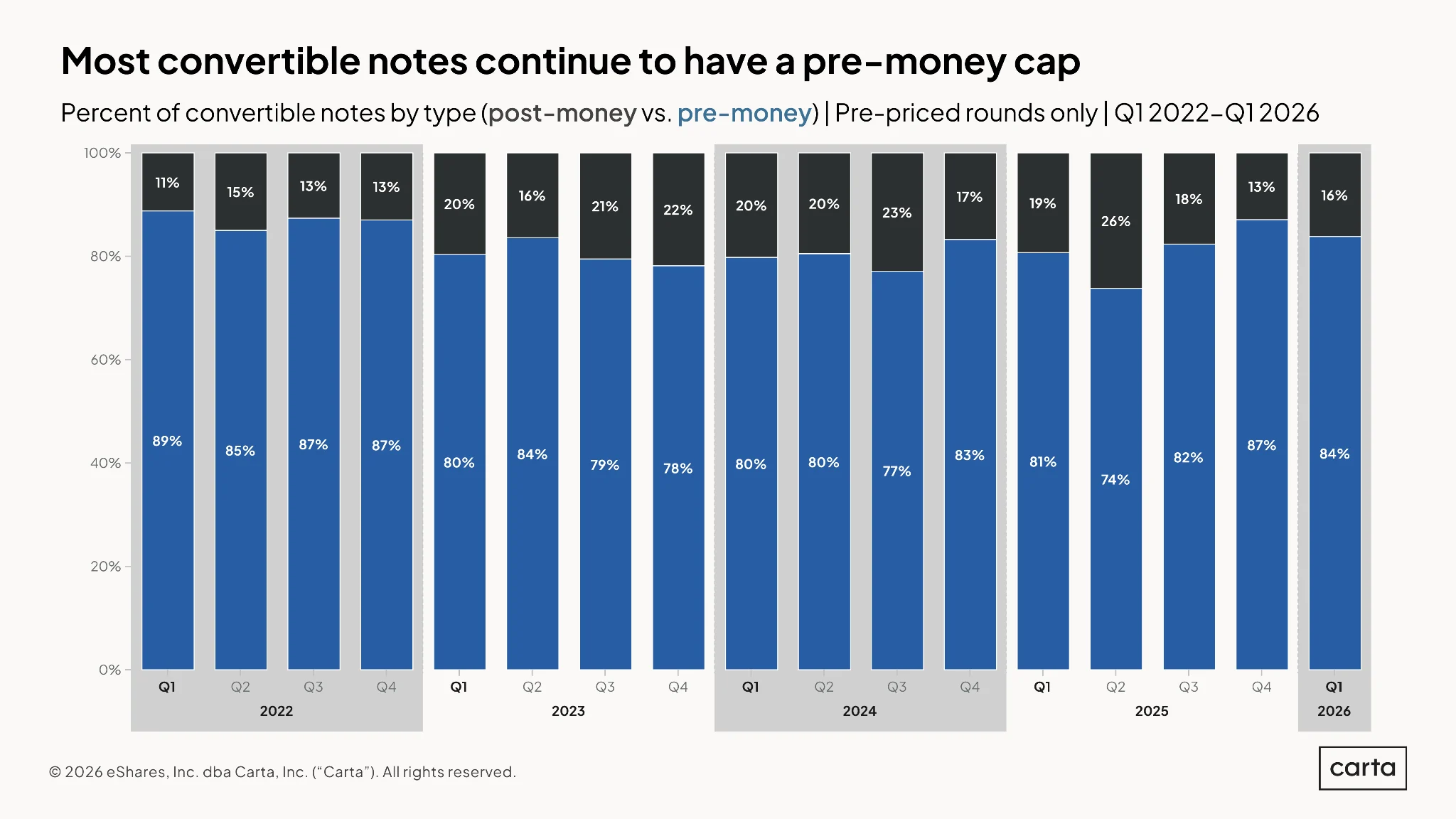
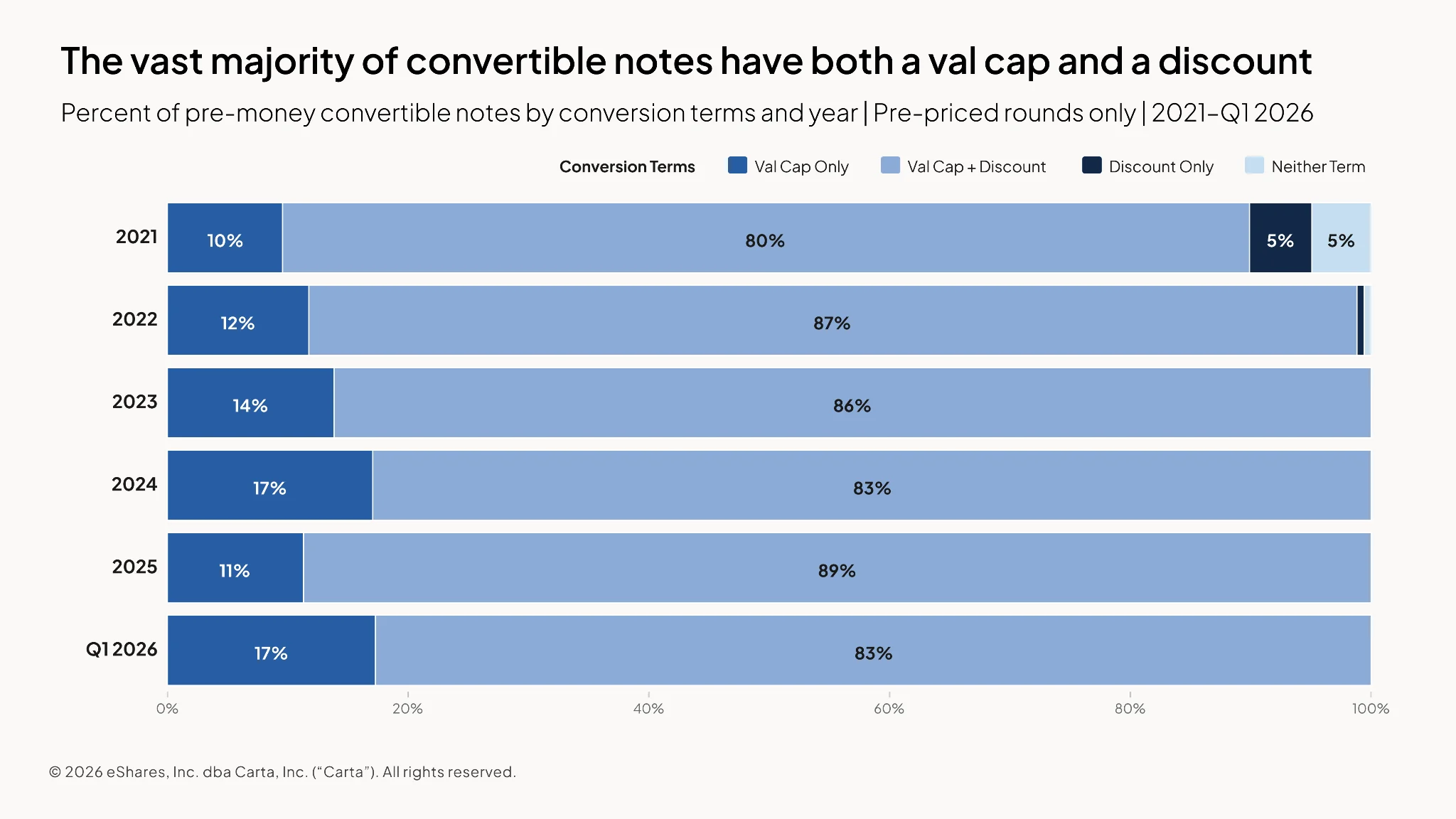
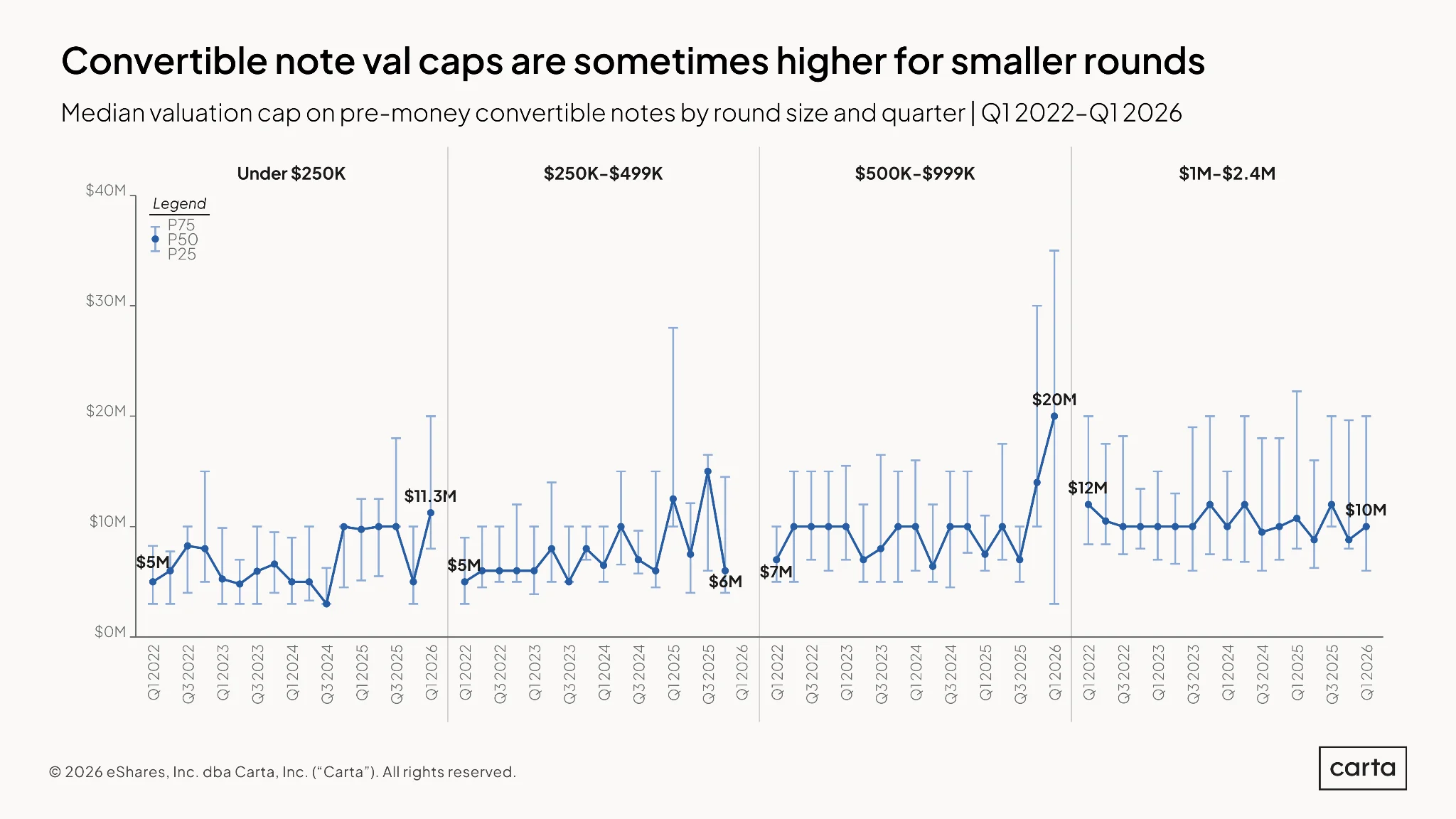
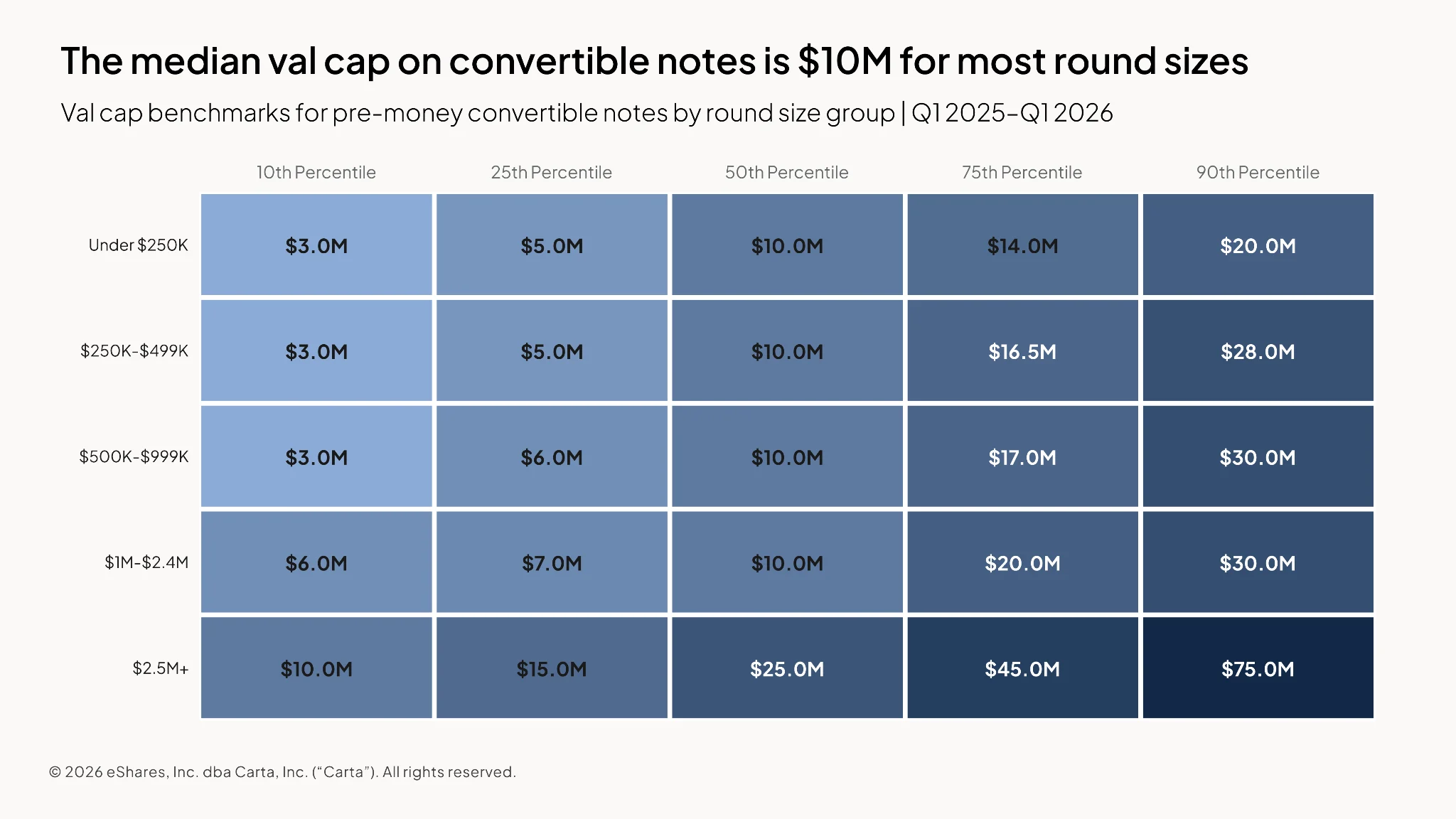
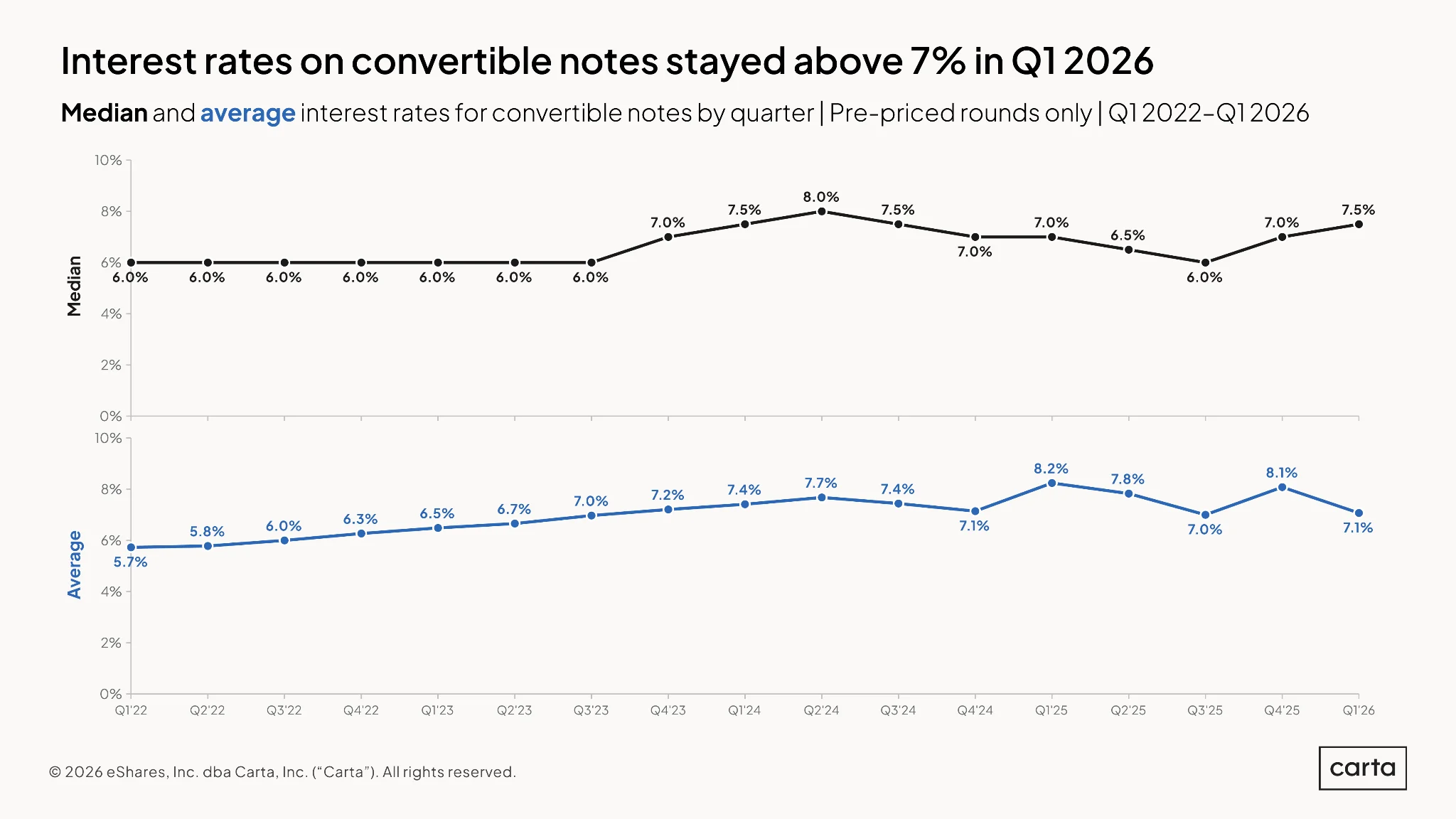
SAFEs vs. convertible notes: Valuation caps on SAFEs have trended upward in recent quarters, but caps on convertible notes have fluctuated greatly and haven’t always increased with round size.
Key trends
SAFEs
Convertible notes
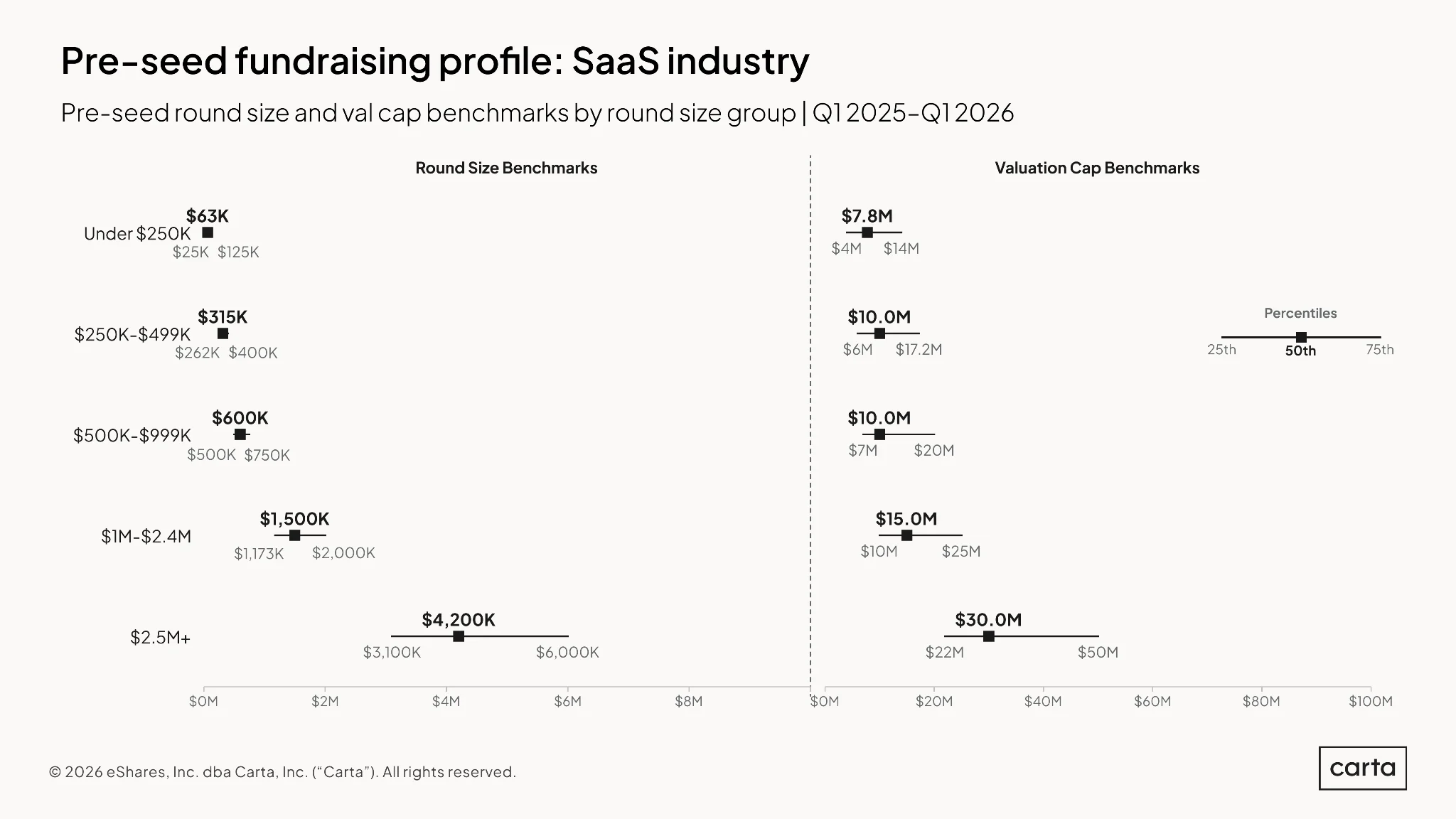
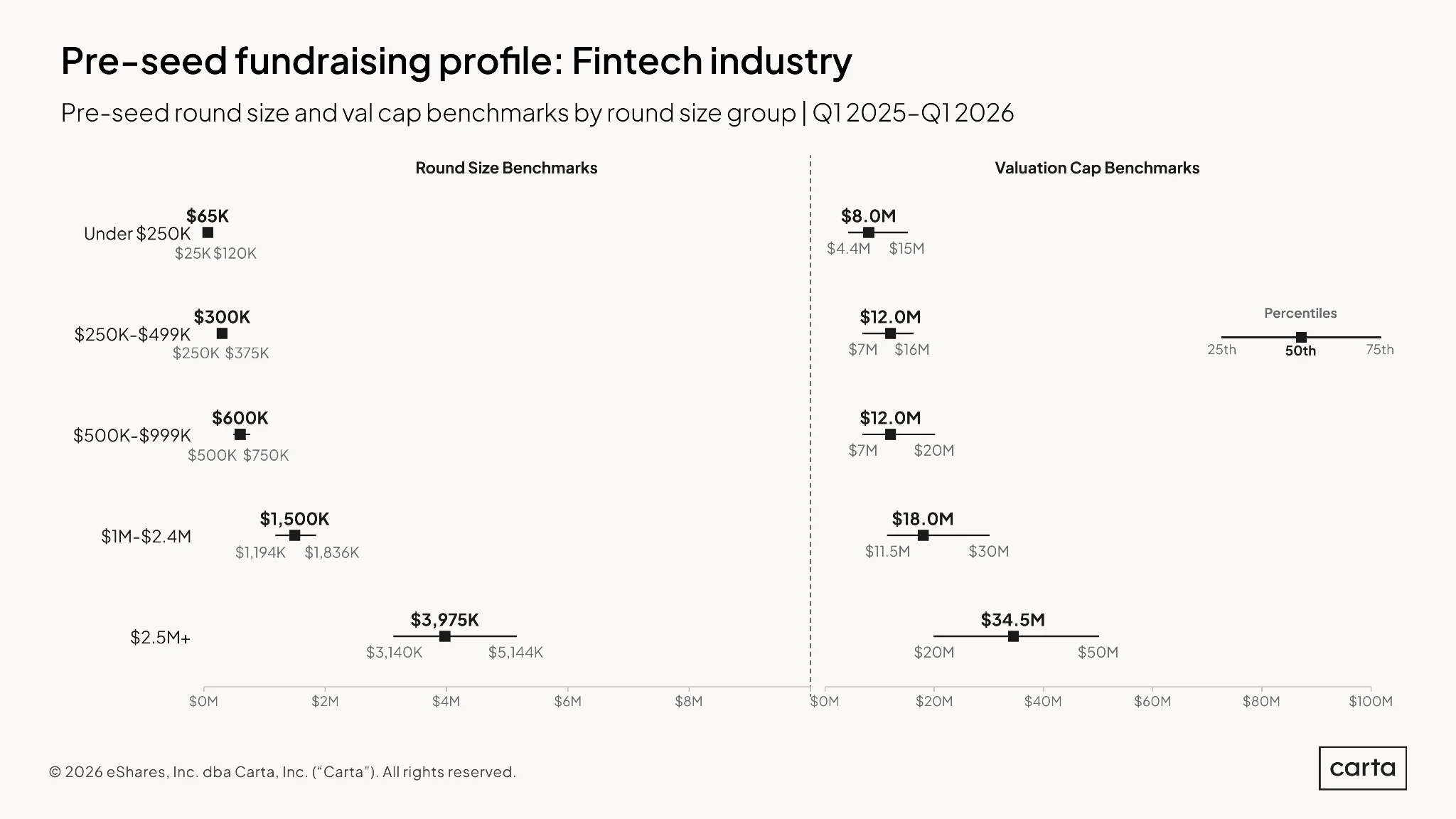
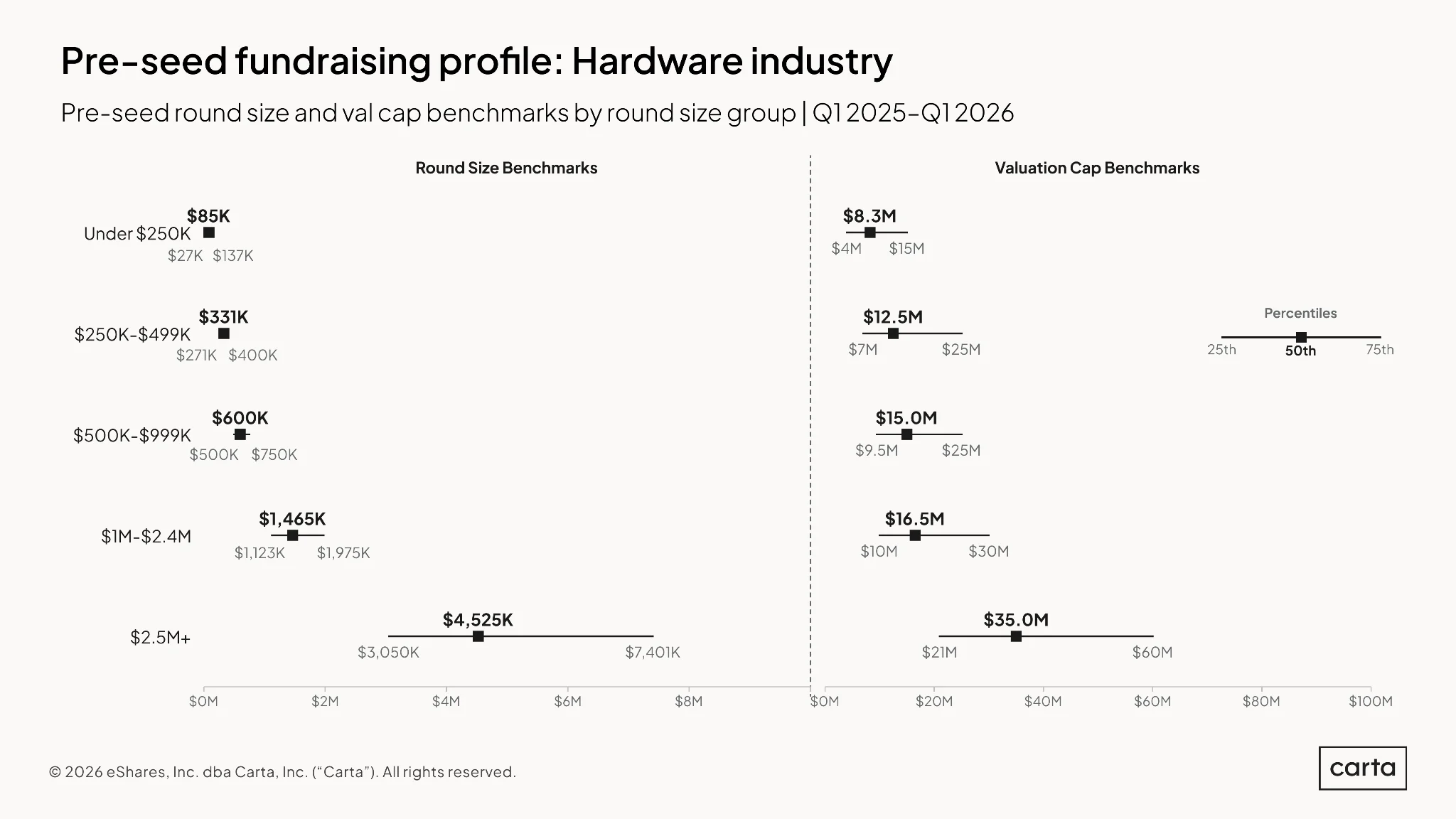
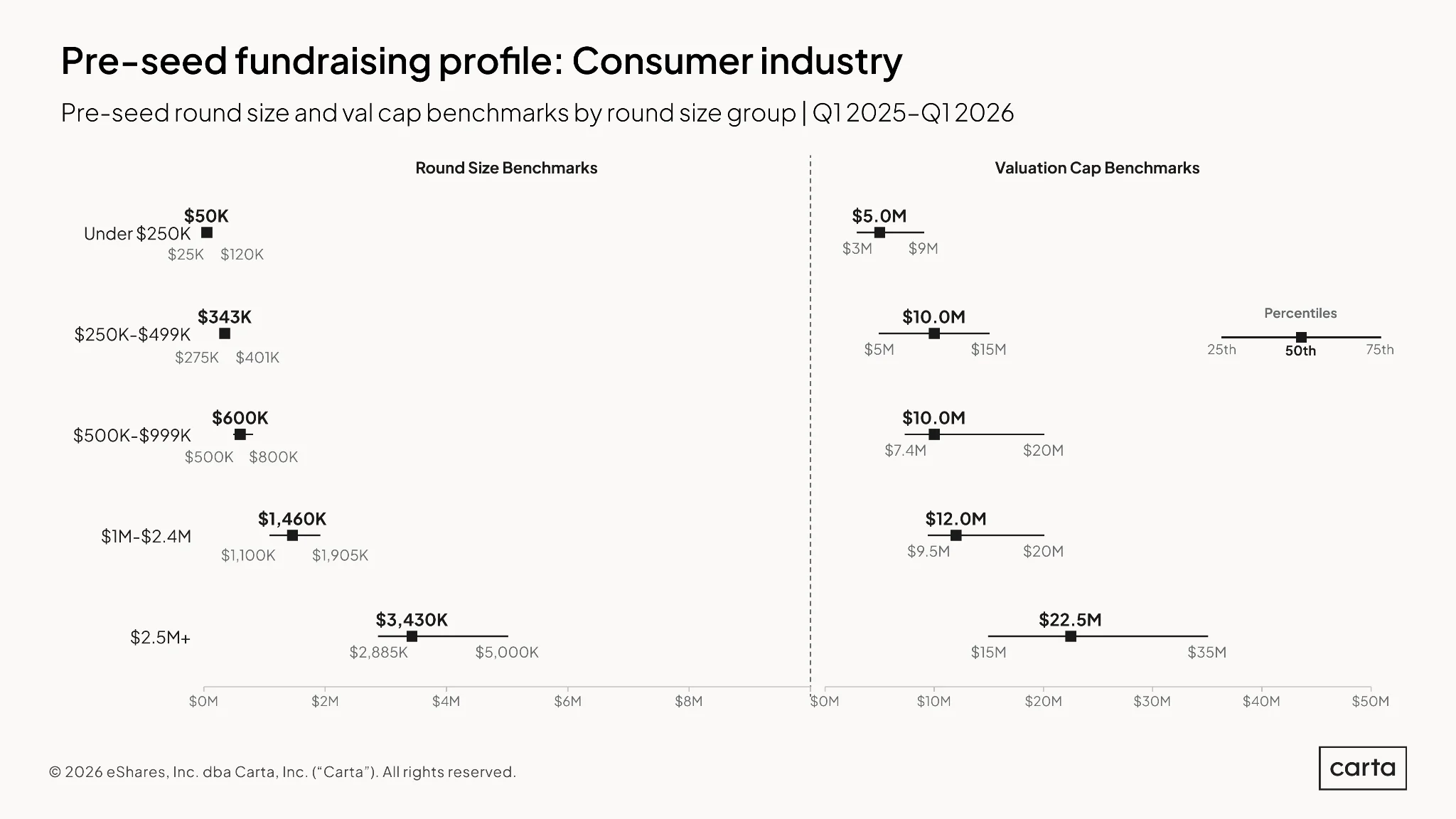
Industries
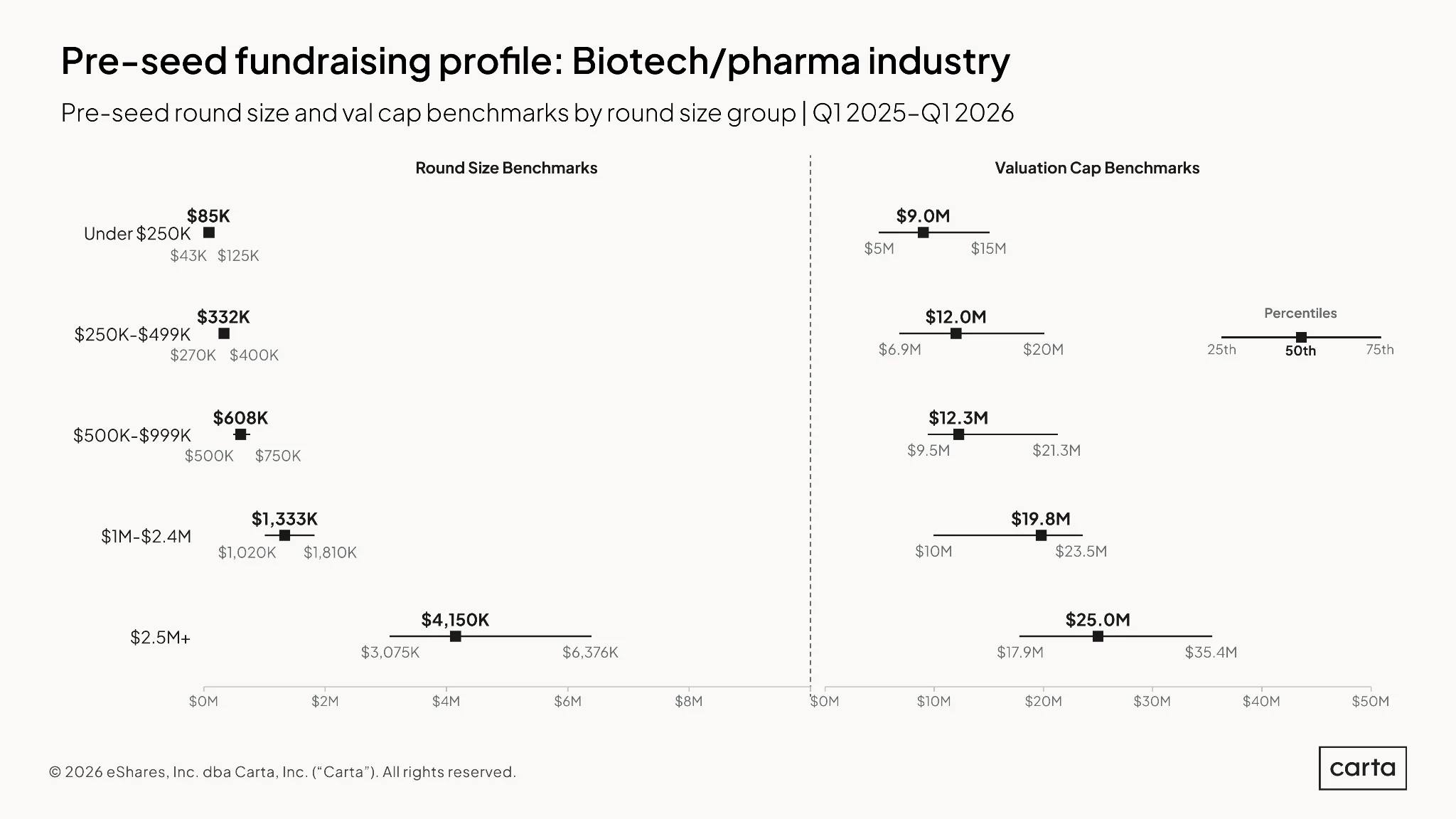
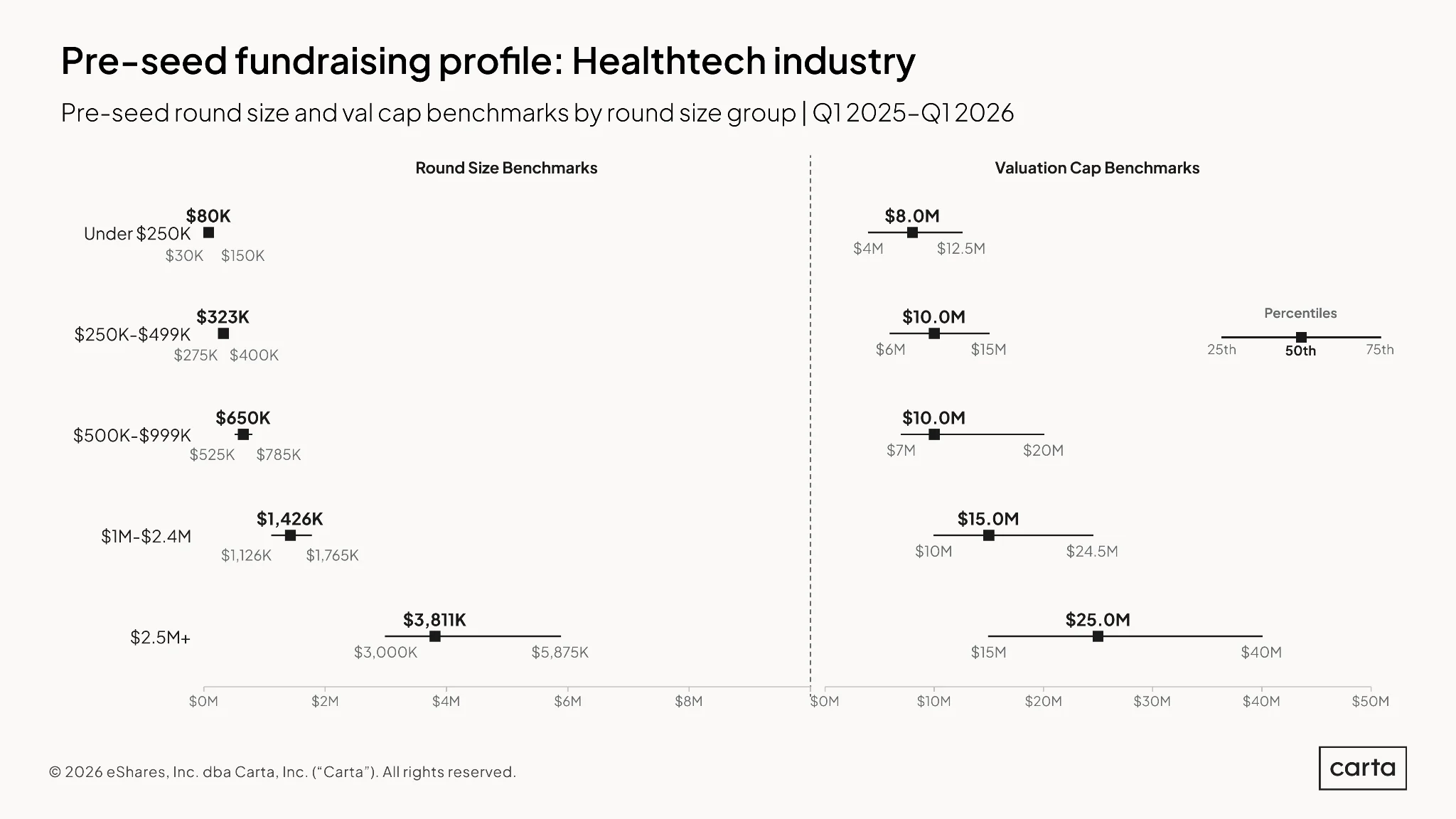
Methodology
Carta helps more than 50,000 primarily venture-backed companies and 1.7 million security holders manage over $4.5 trillion in equity. We share insights from this unmatched dataset about the private markets and venture ecosystem to help founders, employees, and investors make informed decisions and understand market conditions.
Overview
This study uses an aggregated and anonymized sample of Carta customer data. Companies that have contractually requested that we not use their data in anonymized and aggregated studies are not included in this analysis.
The data presented in this pre-seed report represents a snapshot as of May 4, 2026. It encompasses 334,000+ convertible instruments raised by more than 24,000 startups in the United States from Q1 2021 to Q1 2026, with a focus on the 10,000+ instruments raised by 3,000 companies in Q1 2026.
Historical data may change in future studies because there is typically an administrative lag between the time a transaction took place and when it is recorded in Carta. In addition, new companies signing up for Carta’s services will increase historical data available for the report.
Definitions
This report defines “pre-seed” as any fundraising activity that occurs on convertible instruments prior to a company’s first priced equity round. Convertible notes and SAFEs are the two types of convertible instruments analyzed.
A pre-priced “round” (or “deal”) is defined as encompassing all of the convertible instruments that a given company has raised with the same valuation cap, prior to raising any priced equity.

DISCLOSURE: This communication is on behalf of eShares, Inc. dba Carta, Inc. ("Carta"). This communication is for informational purposes only, and contains general information only. Carta is not, by means of this communication, rendering accounting, business, financial, investment, legal, tax, or other professional advice or services. This publication is not a substitute for such professional advice or services nor should it be used as a basis for any decision or action that may affect your business or interests. Before making any decision or taking any action that may affect your business or interests, you should consult a qualified professional advisor. This communication is not intended as a recommendation, offer or solicitation for the purchase or sale of any security. Carta does not assume any liability for reliance on the information provided herein. © 2026 Carta. All rights reserved. Reproduction prohibited.