Founders - if your investors balk at using SAFEs, show them this.

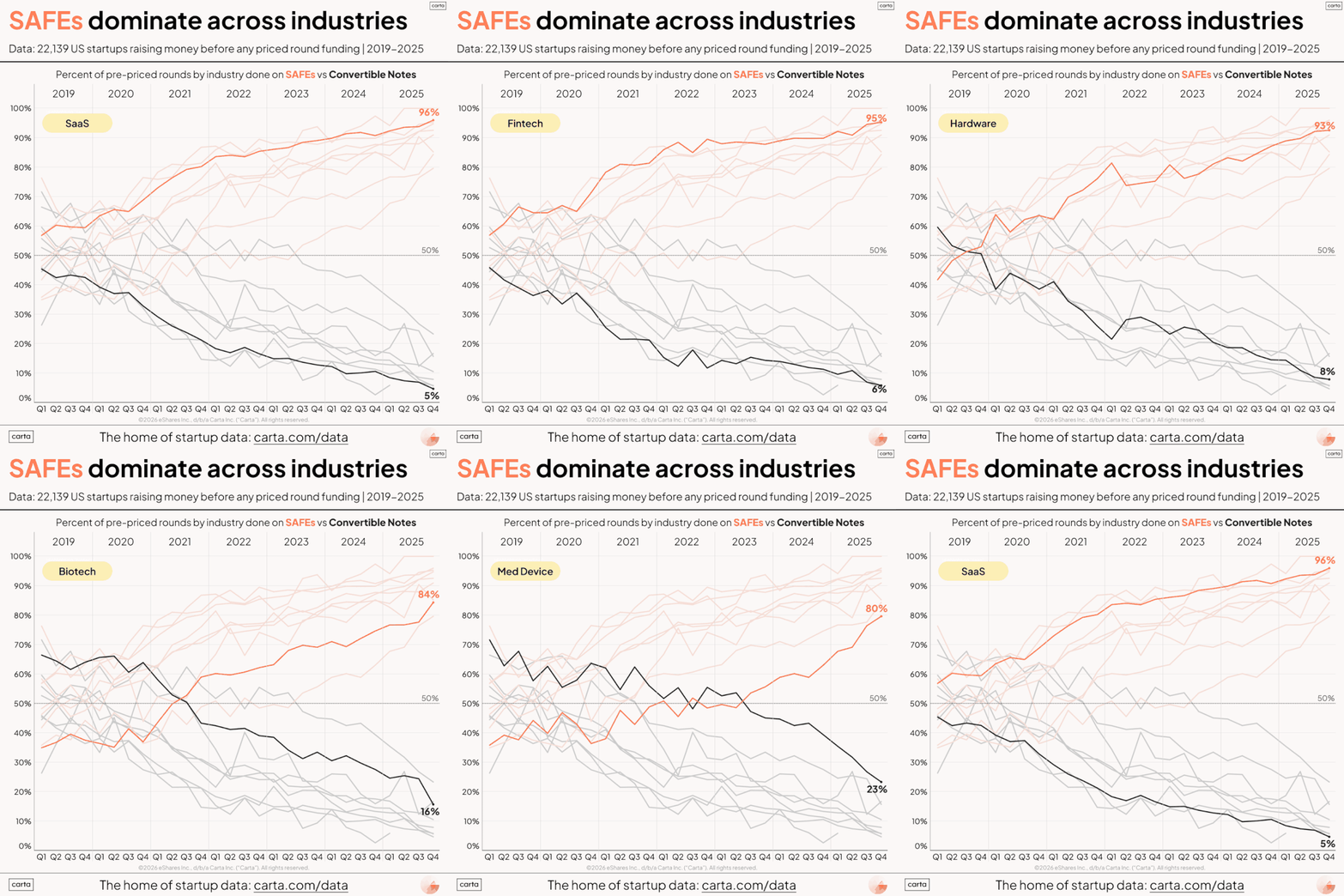
Even the sectors where investors dug in their heels and fought for their convertible notes, SAFEs have dominated in the last few years.
This is according to our database of over 430,000 US SAFEs and Notes signed before priced funding, probably the largest such dataset in the world.
Software sectors like SaaS, Fintech, etc made the flip to SAFEs strongly in 2020/21 and never looked back.
Biotech and Medical Devices held out for another few years but now see 80% of pre-priced rounds flowing through SAFEs.
There's a bit of geography difference mixed in here (eg biotech in the Midwest sees more convertible note usage than biotech in the West), but not a lot.
I've heard all of the objections to SAFEs. Some of them are a bit silly ("founders who use SAFEs don't get the market"), some of them are pretty substantial ("what even are SAFEs under the law?").
But none of them have really mattered.
If you're a founder raising capital, you need to understand the SAFE and how it works.
Got many explainers for you, ping me in the comments for direct links if you want to study up.

DISCLOSURE: This communication is on behalf of eShares, Inc. dba Carta, Inc. ("Carta"). This communication is for informational purposes only, and contains general information only. Carta is not, by means of this communication, rendering accounting, business, financial, investment, legal, tax, or other professional advice or services. This publication is not a substitute for such professional advice or services nor should it be used as a basis for any decision or action that may affect your business or interests. Before making any decision or taking any action that may affect your business or interests, you should consult a qualified professional advisor. This communication is not intended as a recommendation, offer or solicitation for the purchase or sale of any security. Carta does not assume any liability for reliance on the information provided herein. © 2026 Carta. All rights reserved. Reproduction prohibited.