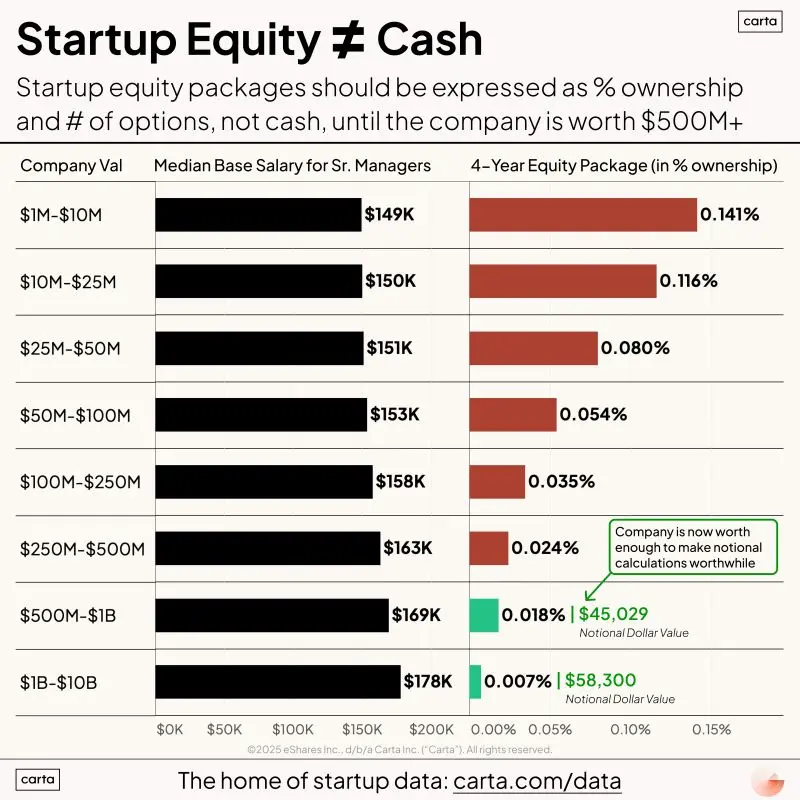
January is the biggest month for new startup hires. Here are 5 questions to help negotiate your equity offer:
𝟭) 𝗔𝘀𝗸 𝗳𝗼𝗿 𝗺𝗼𝗿𝗲 𝗶𝗻𝗳𝗼𝗿𝗺𝗮𝘁𝗶𝗼𝗻 𝗮𝗯𝗼𝘂𝘁 𝘁𝗵𝗲 𝗼𝗽𝘁𝗶𝗼𝗻𝘀 𝘁𝗵𝗲𝗺𝘀𝗲𝗹𝘃𝗲𝘀
If you get a simple count of shares in your offer (say 5,000 shares), you don't know anything. At minimum, you need to ask the strike price of those options (what do you pay per share in order to exercise). And usually you'll receive ISOs (Incentive Stock Options)
Better still would be to get the percentage ownership represented by those 5,000 options. Why? Because then you can compare offers from different startups in a way that makes sense.
𝟮) 𝗔𝘀𝗸 𝗳𝗼𝗿 𝗺𝗼𝗿𝗲 𝗶𝗻𝗳𝗼𝗿𝗺𝗮𝘁𝗶𝗼𝗻 𝗮𝗯𝗼𝘂𝘁 𝘁𝗵𝗲 𝗰𝗼𝗺𝗽𝗮𝗻𝘆'𝘀 𝗳𝘂𝗻𝗱𝗿𝗮𝗶𝘀𝗶𝗻𝗴 𝘁𝗼 𝗱𝗮𝘁𝗲
What was the last post-money valuation of the company? When did that round take place? Has the company had to raise any convertible bridge financing since then? Are there plans to raise more capital?
𝟯) 𝗔𝘀𝗸 𝗮𝗯𝗼𝘂𝘁 𝗲𝗾𝘂𝗶𝘁𝘆 𝘁𝗶𝗺𝗲𝗹𝗶𝗻𝗲𝘀
What is the vesting period on my equity? What is the post-termination equity period for these options (typically they'll say 90 days after you leave, which is..not a lot! Could be a negotiation point for you to push on).
𝟰) 𝗔𝘀𝗸 𝗮𝗯𝗼𝘂𝘁 𝗹𝗶𝗾𝘂𝗶𝗱𝗶𝘁𝘆
Does this company have plans to offer any liquidity to employees before an IPO or acquisition? If it's an early-stage startup, chances are no one has really thought about this yet, which is okay. If it's a late-stage company, worth prodding about.
𝟱) 𝟭 𝘀𝗽𝗲𝗰𝗶𝗳𝗶𝗰 𝗾𝘂𝗲𝘀𝘁𝗶𝗼𝗻: 𝘄𝗵𝗲𝗻 𝘁𝗵𝗶𝘀 𝗰𝗼𝗺𝗽𝗮𝗻𝘆 𝗴𝗼𝗲𝘀 𝗽𝘂𝗯𝗹𝗶𝗰 𝗼𝗿 𝗴𝗲𝘁𝘀 𝗮𝗰𝗾𝘂𝗶𝗿𝗲𝗱, 𝘄𝗵𝗮𝘁'𝘀 𝘁𝗵𝗲 𝗺𝗶𝗻𝗶𝗺𝘂𝗺 𝘃𝗮𝗹𝘂𝗮𝘁𝗶𝗼𝗻𝘀 𝗶𝘁 𝗻𝗲𝗲𝗱𝘀 𝗳𝗼𝗿 𝗽𝗲𝗼𝗽𝗹𝗲 𝘄𝗶𝘁𝗵 𝗰𝗼𝗺𝗺𝗼𝗻 𝘀𝘁𝗼𝗰𝗸 𝘁𝗼 𝗺𝗮𝗸𝗲 𝗮 𝗽𝗿𝗼𝗳𝗶𝘁?
Venture-backed companies can sometimes take on capital that comes with strings attached. Those strings (liquidity preferences, participating preferred, etc) can make it harder for employees to get any real, tangible value out of their equity EVEN WHEN the company has an exit. This question is usually not something a recruiter can answer, but it does show you're thinking deeply about the future.
Final note - I realize negotiating can feel tricky, especially in an environment where new startup positions are scarce. It's always a balance between expressing enthusiasm for the opportunity while also making sure you aren't getting a raw deal.
Equity is not cash. It's upside only.
To maximize compensation, don't join a startup. To maximize agency, learning, and lift - join today

DISCLOSURE: This communication is on behalf of eShares, Inc. dba Carta, Inc. ("Carta"). This communication is for informational purposes only, and contains general information only. Carta is not, by means of this communication, rendering accounting, business, financial, investment, legal, tax, or other professional advice or services. This publication is not a substitute for such professional advice or services nor should it be used as a basis for any decision or action that may affect your business or interests. Before making any decision or taking any action that may affect your business or interests, you should consult a qualified professional advisor. This communication is not intended as a recommendation, offer or solicitation for the purchase or sale of any security. Carta does not assume any liability for reliance on the information provided herein. © 2026 Carta. All rights reserved. Reproduction prohibited.