- Series A funding: How to raise your first priced round
- What is Series A funding?
- Why is it called a Series A round?
- Seed vs. Series A vs. Series B
- What does a company receive in its Series A round?
- What do Series A investors receive for their investment?
- How much equity do Series A investors take?
- Are you ready to raise a Series A round?
- How to get Series A funding
- Series A rounds and convertible securities
- Raising your Series A with confidence
- Frequently asked questions about Series A fundraising
You and your founding team can't build a successful startup without capital, and your sources of capital evolve as the company grows. For early-stage companies, seed money comes from you, angel investors, or friends and family. Series A is the next major step, and the first time outside investors formally price your company.
What is Series A funding?
Series A funding is a startup’s first major round of institutional venture capital (VC) financing after proving market viability and gaining early traction at the seed stage. In exchange, investors usually take 10–30% of the company in preferred stock.
Series A rounds typically involve venture capitalists, angel investors, private equity firms, or other financial firms. Investors look for strong product-market fit, competitive positioning, and a path to profitability. By this stage, startups usually have a viable product and business model, evidence of traction, and clear growth potential.
The Series A round is typically the first priced round most companies raise, meaning investors set a valuation on the company, and a share price is derived for your company's preferred stock. This is in contrast to seed rounds raised on convertible instruments, which typically do not include a stated share price at the time of investment.
Series A rounds vary in size, but have tended to range from $5 million to $15 million in recent years. As of Q2 2026, the median Series A round was $14.7 million according to Carta’s Round Benchmarking Tool. The size of Series A rounds depends on market conditions and investors' appetite for risk, as well as the company's needs as it focuses on establishing product-market fit, hiring employees, and covering other expenses.
Startups use the capital raised from a Series A round to scale their business by investing in:
Further product development: Refining existing products, shipping new features, and improving the user experience.
Market expansion: Entering new markets, expanding geographically, or targeting new customer segments.
Operations: Investing in technology, logistics, and business processes to support scaling efforts.
Sales and marketing: Investing in branding, advertising, partnerships, and customer acquisition.
Team expansion: Hiring key leadership, engineering, marketing, and sales roles.
Why is it called a Series A round?
In the VC industry, priced institutional rounds carry the "Series" label. "Series A" implies it will be followed by subsequent funding rounds, which is often the case, but not always. For example, the company may be acquired, go public, or fail before raising a Series B. The next funding stages follow alphabetically: Series B, Series C, Series D, and so on.
While the names of funding rounds may be similar, each round must be tracked separately. Each round has its own terms, and accurate records are needed to determine stakeholder ownership and how proceeds are distributed in a liquidity event like an acquisition or initial public offering (IPO).
Seed vs. Series A vs. Series B
Money from bootstrapping, crowdfunding, pre-seed funding, or seed funding helps a startup get off the ground with product development and test the market. Series A capital takes the business to the next level by providing the funds to expand operations, acquire more customers, and scale a sustainable revenue model.
The Series B and following rounds can help expand your market reach, grow your company internally, and increase revenue. By the time you reach a Series B round, you should have a significant user or customer base, plenty of traction, and a proven record of revenue growth. Investors usually come in during these later rounds to help with business development and expansion.
The table below shows how the median round changes from seed to Series B, based on Carta's Q2 2026 benchmarks. Treat these as reference points, not targets. Your numbers depend on sector, geography, and growth.
Seed | Series A | Series B | |
Median post-money valuation | $23.9M | $76.3M | $166.2M |
Median round size | $4.5M | $14.7M | $23.3M |
Median dilution | 19.4% | 18.7% | 13.4% |
Typical investors | Angels, pre-seed and seed funds, accelerators | Early-stage VCs and angels | Mid-stage VC firms and existing investors |
Source: Carta’s Round Benchmarking Tool
What does a company receive in its Series A round?
The most important element a company receives for its Series A round is money. Once the round closes, founders can direct it toward day-to-day operations, product development, and growth initiatives. Series A rounds are sometimes "tranched," meaning investors release the capital in phases tied to company milestones.
Beyond capital, a Series A often brings a close working relationship with your investors. An experienced board member can draw on deep industry experience to provide strategic guidance.
Venture capital firms can also connect you to other founders in the firm's portfolio, opening doors to partnerships and introductions that would otherwise be hard to come by. These benefits are present in Series B funding, Series C funding, and later funding rounds as well.
What do Series A investors receive for their investment?
In exchange for their investment, Series A investors receive an equity stake in the company, becoming partial owners.
If the company grows and is acquired by another company or goes public in an initial public offering (IPO), investors realize a return on their investment.
The lead investor, typically a partner at a VC firm, often receives a seat on the company's board of directors, giving that person closer insight into the company's growth and influence over decision-making.
How much equity do Series A investors take?
Across most Series A rounds, investors buy 10%–30% of the company, with the typical round sitting near the middle. Carta's Q2 2026 benchmarks put median Series A dilution at 18.7%. Founders and existing holders give up roughly a fifth of the company in a single round.
That adds up across funding stages. Carta's Founder Ownership Report 2026 found that founding teams retain about 56% of equity after seed and roughly 36% after Series A. Watching the effect on your cap table before you sign is the difference between an intentional raise and an accidental one.
Valuation, funding, and dilution move together. As Peter Walker, former head of insights at Carta, explains: “Valuations are often simply the output of the other two parts of the equation—cash raised and dilution. Most massive valuation rounds also come with massive funding amounts. How much cash do you really need?”
One caveat before you anchor to any headline number: Artificial intelligence (AI) is skewing the averages. Carta's Q1 2026 data shows more than 60% of venture dollars went to AI companies. An AI foundational-model startup can raise a Series A near a $300 million median valuation, versus roughly $55 million for a comparable non-AI startup. If you're not in that category, benchmark against companies like yours.
Are you ready to raise a Series A round?
Seed capital buys time to find product-market fit. A Series A asks a harder question: can you turn that fit into a repeatable, growing business? Investors want to see it before they price the round.
Series A investors typically look for:
Product-market fit: Customers are using the product, coming back, and telling others
Revenue traction: Growing, reasonably predictable revenue rather than one-off deals
Healthy unit economics: A cost of acquiring customers that your margins can support over time
A financial roadmap: A clear plan for how the new capital reaches the next set of milestones
Strong seed performance doesn't guarantee a strong Series A. As Peter Walker points out: “Startups raising in the top decile at seed do not always raise in the top decile at [Series] A—and vice versa.”
If your metrics aren't there yet, raising more seed capital is often the better move. Depending on your situation, an extra two quarters of traction can change both your valuation and the quality of investors you attract.
How to get Series A funding
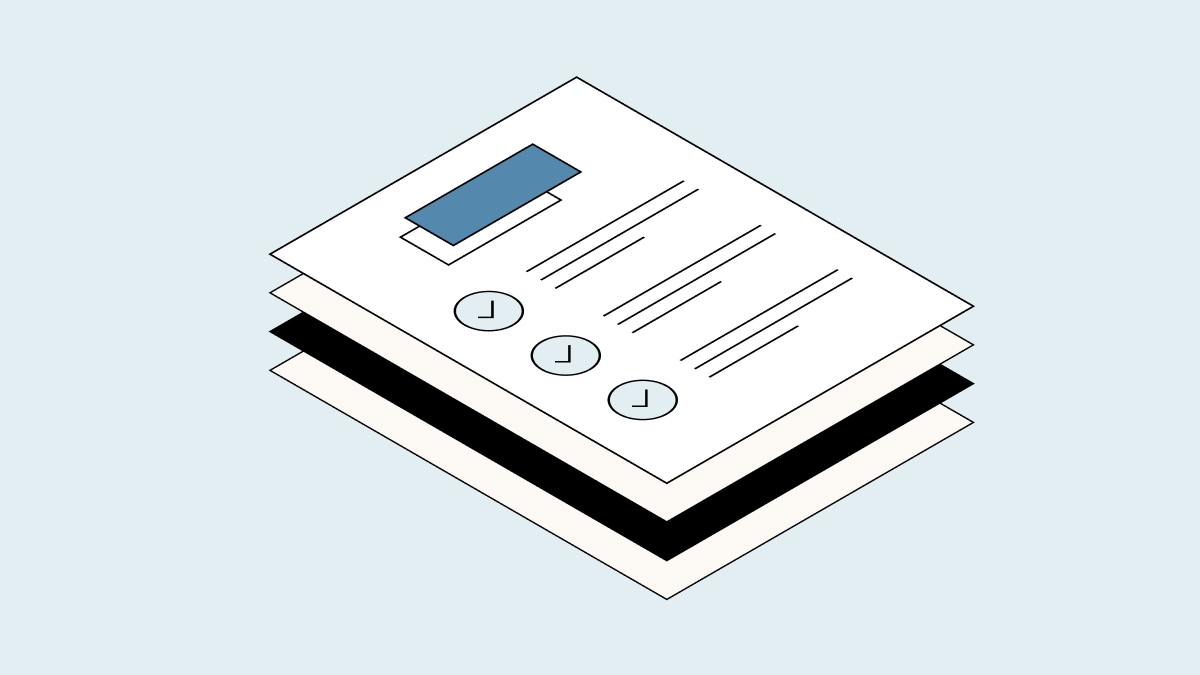
Raising a Series A typically follows these steps:
The decision. Your team decides you're ready to raise and can credibly make the case to investors, backed by metrics and a business plan that holds up to scrutiny.
Investor pitches. You'll create a slide presentation known as a pitch deck, introducing yourself and other founders, the product, the competitive advantage, the size of your target market, and your vision for how the company will succeed.
Investor meetings. Meetings with potential investors from one or more VC firms follow. Ideally, multiple firms move forward, which introduces competition into the funding round and can improve your terms.
Term sheet negotiations. When an investor is ready to move forward, they produce a term sheet: a document outlining the investment amount, proposed valuation, and key deal terms. Investors often propose terms that favor themselves, and knowing whether a term sheet is clean, meaning free of commonly investor-favorable provisions, takes experience.
Term sheet acceptance. You and your co-founders or execs will then select which offer(s) to accept and sign a term sheet. The lead investor often brings additional investors into the round to fill it out.
Legal negotiations and deal closing. Investors and their counsel typically conduct additional due diligence, reviewing your financials, funding history, and founders' backgrounds. The Carta Law Venture Financing team can then negotiate the final transaction documents before the deal closes and funds transfer. Plan for 6-8 weeks from term sheet to close.

Series A rounds and convertible securities
What sets the Series A apart from later rounds is the conversion of seed-stage instruments into preferred shares.
In seed-stage financings, companies typically issue convertible securities in exchange for funding. These instruments, such as SAFEs and convertible notes, convert into shares at the Series A, when a price per share is established for the first time. That's why the Series A, and every round that follows, is called a priced round.
Because conversion affects ownership percentages and the price investors pay per share, founders should have a clean, accurate cap table in place before the Series A closes.
Raising your Series A with confidence
The terms you accept at your Series A shape ownership for every round that follows. Before you raise, know your traction, understand how much equity you're giving up, and walk into negotiations with a current cap table in hand.
Ready to execute your Series A efficiently? Carta’s complete fundraising suite streamlines your entire round, including real-time market benchmarking and automated cap table updates to flat-fee legal execution through Carta Law Venture Financing.
Request a demo today to close your round faster and keep your team focused on growth.

Frequently asked questions about Series A fundraising
What is the difference between Series A, B, and C funding?
Each letter marks a later, usually larger priced round. Series A funds the search for repeatable growth, Series B scales a proven model, and Series C and beyond fund expansion, acquisitions, or the run-up to an exit. Valuations and check sizes rise at each stage.
How much equity do you give up in a Series A round?
Typically 10%–30%. Carta's Q2 2026 benchmarks put median Series A dilution near 18.7%, so most founding teams give up roughly a fifth of the company in the round.
How hard is it to get Series A funding?
It's competitive. Investors want proof of product-market fit, growing revenue, and sound unit economics—not just a promising idea. Many strong seed companies raise more seed capital before they're ready for a Series A.
How long does a Series A take to close?
Plan for a few months end to end. Once a term sheet is signed, legal negotiations and closing typically run 4–8 weeks.
What valuation should you expect at Series A?
It depends on your sector and growth. The median SaaS Series A carried a $93.5 million post-money valuation according to Carta's Q2 2026 benchmarks, though AI companies skew well above that.
DISCLOSURE: This communication is on behalf of eShares, Inc. dba Carta, Inc. ("Carta"). This communication is for informational purposes only, and contains general information only. Carta is not, by means of this communication, rendering accounting, business, financial, investment, legal, tax, or other professional advice or services. This publication is not a substitute for such professional advice or services nor should it be used as a basis for any decision or action that may affect your business or interests. Before making any decision or taking any action that may affect your business or interests, you should consult a qualified professional advisor. This communication is not intended as a recommendation, offer or solicitation for the purchase or sale of any security. Carta does not assume any liability for reliance on the information provided herein. © 2026 Carta. All rights reserved. Reproduction prohibited.